


Retail signage decisions are rarely straightforward. A sign that looks right in a vendor catalog can perform poorly in a real store environment — fading under fluorescent lighting, cracking in high-traffic areas, or simply failing to communicate clearly at the intended viewing distance. For retail brands operating across multiple locations, a poor signage decision is not just an aesthetic problem. It becomes a consistency problem, a maintenance problem, and eventually a cost problem at scale.
Acrylic has become one of the most widely used materials in retail signage across the United States, and for practical reasons. It is durable, relatively lightweight, compatible with a wide range of printing and fabrication methods, and available in configurations that suit everything from window displays to interior brand walls. But acrylic is not a single category. It covers a broad range of products, each suited to different applications, mounting conditions, and visual goals.
Before committing budget to any sign order, retail decision-makers benefit from understanding what these categories actually are and where each type genuinely belongs. This article walks through ten types of acrylic signage that appear most commonly in US retail environments, with enough context to make an informed vendor conversation possible.
Why Acrylic Has Become a Standard Material in Retail Environments
Acrylic sheet, also known by the trade name Plexiglas, is a thermoplastic material that has been used in commercial applications since the mid-twentieth century. Its combination of optical clarity, workability, and weather resistance made it an early replacement for glass in display applications, and its role in retail signage has only expanded since then. For those evaluating supplier options or planning a new rollout, reviewing a structured Acrylic Signage guide before engaging fabricators can help clarify which product types are appropriate for specific retail contexts.
The material’s broad adoption in retail is not simply about appearance. Acrylic is significantly lighter than glass, which reduces shipping costs, simplifies installation, and lowers the risk of breakage during transit or storefront installation. It also accepts a wide range of surface treatments — printing, engraving, painting, and polishing — which gives fabricators flexibility that harder materials do not always provide.
Durability Expectations Versus Real-World Conditions
One common misunderstanding about acrylic in retail settings is that all grades perform equally. Cast acrylic and extruded acrylic are produced differently and behave differently under stress. Cast acrylic tends to hold up better under engraving and laser cutting, while extruded acrylic is often more consistent in thickness across large sheets. For outdoor-facing applications, UV-stabilized grades are necessary — standard acrylic will yellow over time when exposed to direct sunlight, which creates a visible degradation problem for brands relying on consistent presentation across locations.
Flat-Cut Acrylic Letters and Logos
Flat-cut acrylic letters are exactly what the name suggests — individual characters or logo shapes cut from a single sheet of acrylic and mounted directly to a wall, panel, or backing surface. This format is one of the most common in retail interiors, used for brand name displays behind counters, entrance walls, and department identifiers within larger store layouts.
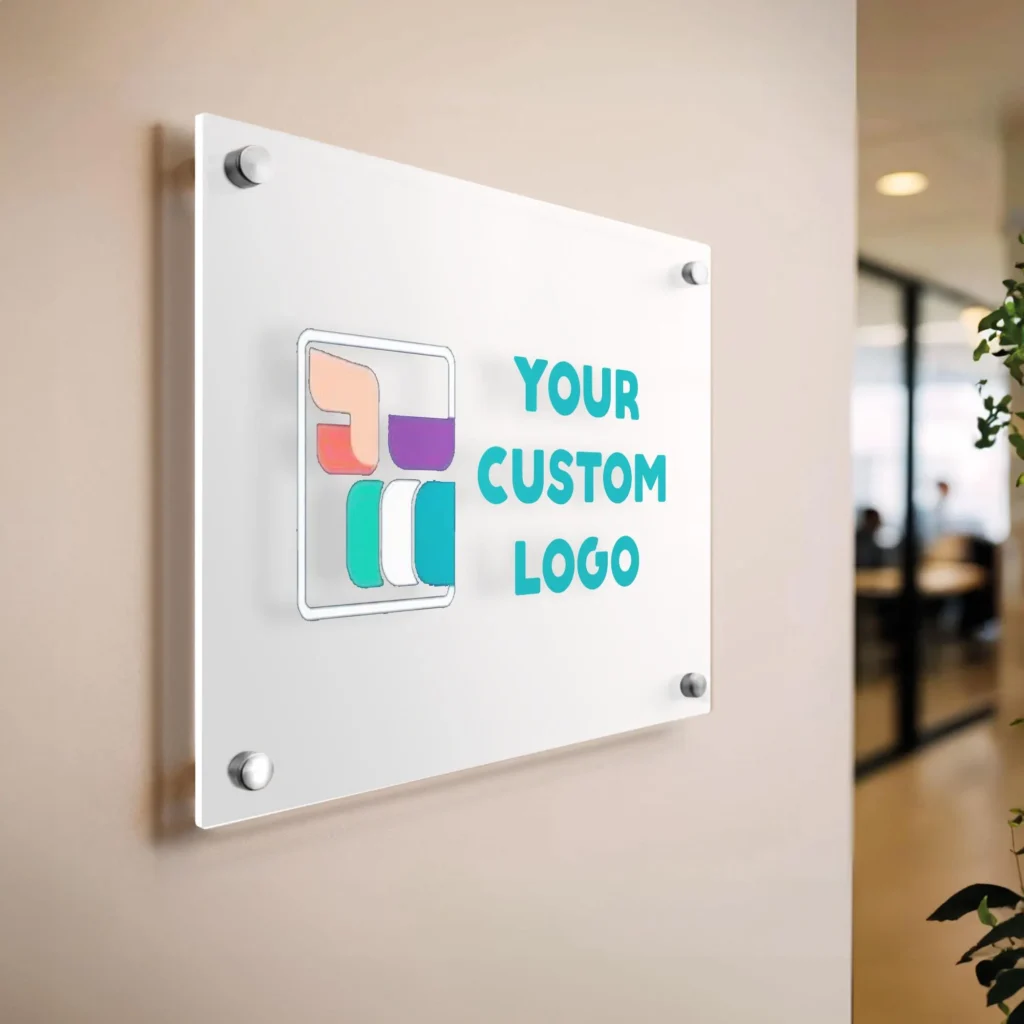
The visual effect depends heavily on the mounting method. Letters mounted flush against a wall create a simple, clean appearance. When mounted with standoffs — small hardware pieces that hold the letters a short distance from the wall — the letters cast a slight shadow that adds depth without requiring any additional illumination. This shadow-mount technique is popular in boutique retail and specialty brand stores where visual sophistication matters without the cost of illuminated options.
Color and Finish Decisions for Cut Letters
Acrylic sheet is available in hundreds of stock colors, and letters can also be painted on the rear face to achieve specific brand colors. The rear-painting method, sometimes called second-surface painting, protects the color from surface contact and gives the letter a deeper, more polished appearance. For brands with strict color standards, this approach reduces the risk of visible fading or chipping that occurs with front-surface treatments.
Illuminated Acrylic Signs
Illuminated acrylic signs use edge-lit or backlit configurations to distribute light across or through the acrylic panel. Edge-lit signs introduce light along the panel’s edge, and the acrylic itself carries the light to etched or printed graphics. Backlit signs place a light source behind the acrylic, which requires either a translucent or frosted panel to diffuse the light evenly across the face.
These signs are particularly effective in low-ambient-light retail environments such as specialty electronics stores, cosmetics boutiques, and restaurant interiors where general lighting is deliberately subdued. They draw attention without relying on exterior lighting conditions, which makes them more consistent performers than non-illuminated options across locations in different building types.
LED Integration and Long-Term Maintenance
Most illuminated acrylic signs produced today use LED light sources rather than fluorescent tubes. LED systems consume less power, generate less heat, and have a significantly longer operational life. For retail brands managing dozens or hundreds of locations, the maintenance implications of sign lighting are real operational considerations. A sign that requires bulb replacement every two years across a large store network creates recurring labor costs that compound over time. LED-based acrylic signs reduce that exposure substantially.
Acrylic Menu Boards and Pricing Displays
In food retail, quick-service restaurants, and specialty beverage concepts, acrylic menu boards serve a functional role that goes beyond aesthetics. These boards need to be readable at distance, updatable without full replacement, and durable enough to withstand daily proximity to cooking environments. Acrylic panels are used as the face material for printed inserts, sliding panel systems, and direct-print menu displays.
The format chosen directly affects operational flexibility. A direct-print acrylic menu board is permanently set and requires a full replacement if pricing or items change. A panel-based system, where printed inserts slide into an acrylic frame, allows for partial updates without replacing the entire fixture. For brands that adjust offerings seasonally or respond to supply chain changes, the insert-based approach reduces long-term print costs.
Wayfinding and Directory Signs
Wayfinding signage made from acrylic appears in retail environments primarily in larger format stores — department stores, malls, multi-level retail centers, and large-footprint grocery concepts. These signs direct customers between departments, floors, or service areas. Acrylic is preferred in these applications because it can be machined precisely, accepts changeable inserts, and maintains a clean appearance over years of use.
According to the Americans with Disabilities Act standards, certain directional and informational signs in public commercial spaces must meet specific contrast, mounting height, and tactile requirements. Acrylic wayfinding signs can be produced with raised text and Braille using routing or casting methods, making the material compatible with compliance requirements without requiring separate production runs of different materials.
Frosted and Etched Acrylic Panels
Frosted acrylic panels are used where partial privacy or light diffusion is needed alongside a branded visual element. Common retail applications include fitting room partitions, glass-alternative partitions in open-plan retail spaces, and decorative window treatments where natural light is desirable but direct visibility is not. Etched acrylic takes this further by creating visible patterns or logos within a frosted surface, adding a design element without introducing additional materials.
The durability of etched surfaces is worth evaluating carefully. Surface etching that is too shallow can fade with cleaning and regular contact. Deeper engraving or cast-in textures are more permanent and better suited to high-traffic or high-touch areas. Brands specifying frosted or etched panels for retail interiors should confirm the production method with fabricators before finalizing orders.
Acrylic Display Risers and Product Stands
Product display risers made from clear acrylic are common in cosmetics, electronics accessories, and specialty retail environments. These are not technically signs, but they serve a visual communication function by positioning products at eye level and creating a tiered display that guides customer attention. When combined with printed acrylic base cards or label holders, they function as a hybrid of display fixture and signage.
Clear acrylic risers are popular because they do not visually compete with the products displayed on them. The material essentially disappears in the display context, allowing the product itself to carry the visual weight. For brands with strong product packaging, this is a deliberate and effective presentation strategy.
Printed Acrylic Panels for Brand Walls and Interiors
Direct printing onto acrylic using UV flatbed printing technology allows for high-resolution imagery, photography, and brand graphics to be applied directly to the panel surface. These printed panels are used in retail environments as brand story walls, product campaign displays, and interior decorative elements that reinforce brand identity throughout the store experience.
The quality of the print depends on both the printing technology and the panel preparation. Acrylic surfaces must be clean and properly treated before printing to ensure ink adhesion. Second-surface printing — printing on the rear face of a clear panel and viewing through the panel — produces a more vibrant and protected result than front-surface printing in most retail conditions.
Outdoor-Rated Acrylic Signage
Not all acrylic is appropriate for outdoor use. UV-stabilized cast acrylic is the standard choice for exterior applications. This grade is formulated to resist yellowing, surface crazing, and impact degradation over extended outdoor exposure. For retail brands with storefront signage, outdoor kiosks, or exterior wayfinding panels, specifying the correct grade upfront avoids the replacement cycle that follows from using interior-grade material in exterior conditions.
Outdoor acrylic signs also require mounting hardware and edge treatments suited to temperature variation. Acrylic expands and contracts with temperature changes, and sign systems that do not account for this movement can crack or distort over time, particularly in climates with significant seasonal temperature swings.
Dimensional and Layered Acrylic Signs
Dimensional acrylic signs use multiple layers of acrylic cut to different shapes and stacked or offset to create a three-dimensional visual effect. This format is used for high-impact brand displays, award and recognition walls, and premium retail interior statements. The layering can combine different colors, finishes, and opacities to create depth and visual interest that flat signage cannot produce.
These signs require more precise fabrication and more careful installation planning than flat alternatives. The layers must align accurately, and the mounting system must support the combined weight and depth of the assembled piece. For retail brands considering dimensional acrylic for flagship locations or high-profile store renovations, involving the fabricator in the design phase early reduces the risk of installation problems.
Magnetic and Changeable Acrylic Sign Systems
Changeable acrylic sign systems use acrylic as the frame or face material for signs that require periodic content updates — promotional pricing, event announcements, and seasonal campaigns. Magnetic-backed inserts, sliding panels, and snap-frame acrylic enclosures all allow graphic content to be swapped without replacing the sign infrastructure.
For multi-location retail brands that run coordinated national promotions, these systems allow local teams to update signage from centrally produced graphic kits without requiring professional installation. The operational efficiency of this approach is meaningful at scale — reducing the cost and coordination burden of campaign rollouts across a large store network.
Making the Right Choice Before the Order Goes In
The range of acrylic signage options available to retail brands is wide enough that a poorly defined brief can result in the wrong product arriving at the right store at the wrong time. The ten types outlined in this article cover the most common retail applications, but the right choice in each case depends on the specific combination of environment, durability requirements, update frequency, compliance obligations, and budget.
The most consistent mistake retail brands make in signage procurement is treating it as a purchasing decision rather than a specification decision. Knowing what type of sign is needed, in what grade of material, with what production method, before going to a vendor, produces better results — both in the initial order and over the lifecycle of the sign program. Brands that treat acrylic signage as a category to understand rather than a product to simply buy tend to spend less over time and maintain more consistent visual presentation across their store networks.
Taking time to review the technical and application differences between sign types, consulting with fabricators early, and building internal standards for signage specifications are the practical steps that reduce costly do-overs and keep retail environments looking intentional rather than improvised.