


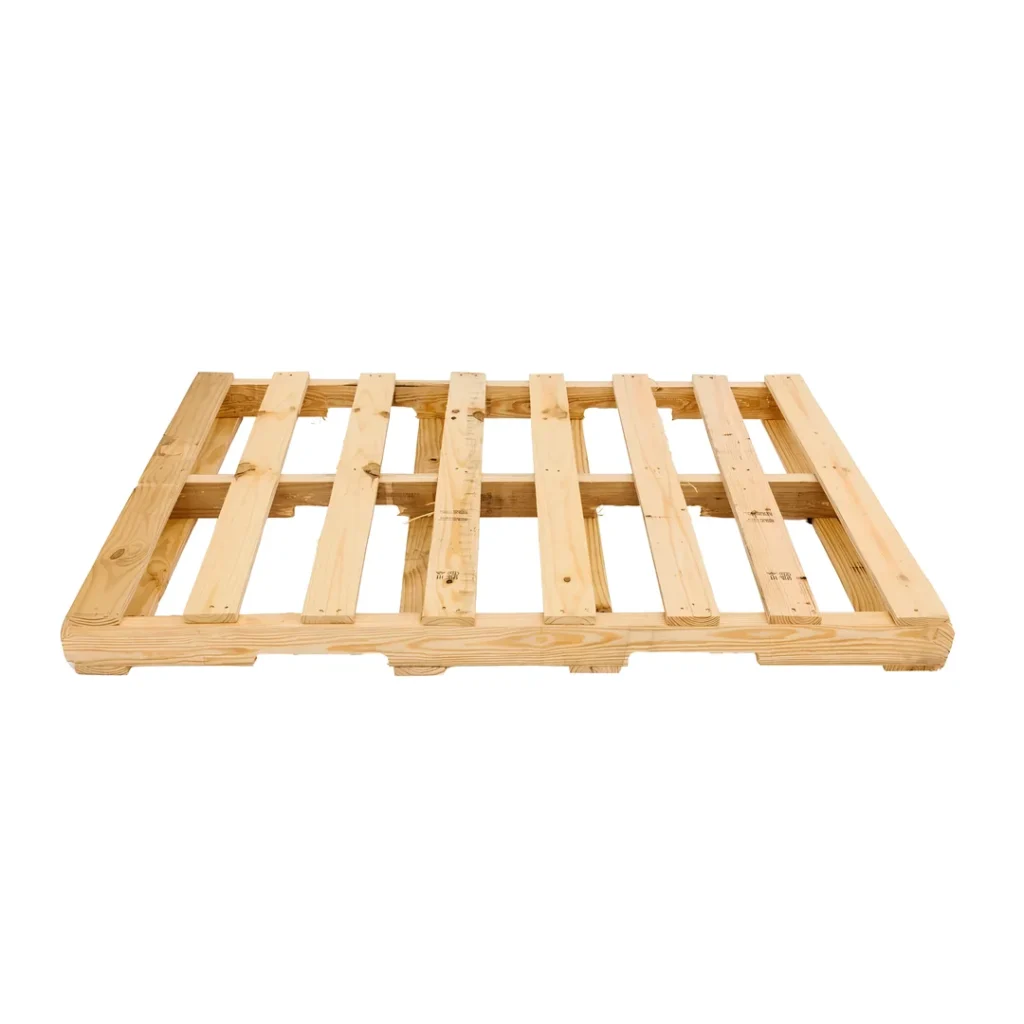
Choosing the right pallet size is important for businesses handling heavy, oversized, or specialized products. Standard pallet dimensions may not always provide adequate support for certain loads, particularly in manufacturing and industrial distribution. 48×48 pallets offer a square platform that supports a range of storage, transportation, and material handling requirements.
Available in new, recycled, custom, and heat-treated configurations, these pallets provide flexibility for different commercial applications. Understanding their construction, capacity, and handling requirements helps businesses select appropriate shipping equipment.
What Are 48×48 Pallets?
48×48 pallets are shipping platforms measuring 48 inches in length and 48 inches in width. Their square design provides a consistent footprint for products that require more width than standard rectangular pallets.
These pallets are commonly used for industrial materials, manufacturing components, drums, and other products requiring a larger support surface.
Depending on construction and specifications, 48×48 pallets can support different load capacities and material handling requirements.
Types of 48×48 Pallets Available
Businesses can choose between several types of 48×48 pallets based on product weight, transportation conditions, and purchasing requirements.
New Wooden 48×48 Pallets
New wooden pallets are manufactured using unused lumber and components. They provide consistent construction and can be built to meet specific dimensions and performance requirements.
Businesses often select new pallets when uniform quality or specialized construction is necessary.
Recycled 48×48 Pallets
Recycled pallets are recovered from previous use and inspected before being returned to service. Some may undergo repairs to restore damaged components.
These pallets can provide a lower-cost alternative to new pallets when their condition meets the intended handling requirements.
Heat-Treated 48×48 Pallets
Heat-treated pallets undergo processing designed to meet applicable international wood packaging requirements.
When properly treated and marked according to ISPM 15, these pallets can be suitable for export shipments to destinations that require compliant wood packaging.
Custom 48×48 Pallets
Custom pallets are manufactured according to specific construction, load capacity, and material requirements.
Businesses transporting heavy machinery, industrial equipment, or specialized components may benefit from customized deck boards, support structures, and entry configurations.
Understanding 48×48 Pallet Load Capacity
Load capacity is an important consideration when selecting 48×48 pallets for commercial use.
Capacity depends on several factors, including wood species, board thickness, construction design, and weight distribution.
Meridian Packaging lists standard 48×48 pallet configurations supporting approximately 2,500 pounds and heavy-duty options supporting up to 4,600 pounds, depending on construction.
Businesses should also distinguish between three common load conditions:
- Static load: Weight supported while the pallet remains stationary on a suitable surface.
- Dynamic load: Weight supported while the pallet is being moved with material handling equipment.
- Racking load: Weight supported when the pallet is placed on warehouse racking systems.
These load ratings are not interchangeable. Businesses should verify the capacity of the specific pallet design before use.
Block vs. Stringer 48×48 Pallets
Two common construction options for 48×48 pallets are block pallets and stringer pallets.
| Block Pallets | Stringer Pallets |
| Use blocks to support deck boards | Use parallel stringers for structural support |
| Commonly provide four-way entry | Commonly provide two-way or partial four-way entry |
| Offer flexible handling access | Suitable for many conventional warehouse operations |
| Available in heavy-duty configurations | Available in standard and reinforced designs |
The most suitable construction depends on warehouse equipment, required load capacity, and transportation conditions.
Key Benefits of Using 48×48 Pallets
48×48 pallets provide several advantages for businesses handling industrial and oversized shipments.
Larger Support Surface
The square footprint provides a wider platform than commonly used 48×40-inch pallets.
This can help accommodate products that require additional width, provided the load is properly distributed and secured.
Flexible Material Handling
48×48 pallets are available with different entry configurations to accommodate forklifts and pallet jacks.
Four-way entry designs can improve handling flexibility where equipment access is required from multiple directions.
Heavy-Duty Construction Options
Businesses can select reinforced pallet designs for heavier industrial loads.
Load capacity should always be verified according to the pallet’s construction specifications and intended application.
Multiple Material Options
New, recycled, and remanufactured pallets provide purchasing flexibility.
Businesses can choose configurations based on cost, quality requirements, and material availability.
Industries That Use 48×48 Pallets
Several industries rely on larger pallet dimensions for specialized handling requirements.
Manufacturing
Manufacturers use 48×48 pallets to transport machinery components, fabricated materials, and industrial products.
Their larger footprint can accommodate equipment and products requiring wider support.
Chemical Manufacturing
Chemical manufacturers may use square pallets for drums and selected industrial containers.
Pallet construction must be suitable for the container weight, securing method, and relevant handling requirements.
Warehousing and Distribution
Warehouses use 48×48 pallets to store and move products that do not fit efficiently on smaller pallets.
Facilities should verify compatibility with racking systems, forklifts, and storage layouts.
International Shipping
Heat-treated 48×48 pallets may be used for export shipments when they meet applicable ISPM 15 requirements.
Businesses should confirm destination-specific packaging requirements before shipping.
How to Choose the Right 48×48 Pallets
Businesses should evaluate pallet specifications before purchasing.
Important considerations include:
- Load capacity: Match pallet strength with product weight and handling conditions.
- Construction type: Select block or stringer designs based on equipment compatibility.
- Wood condition: Evaluate material quality and structural integrity.
- Entry configuration: Confirm forklift and pallet jack accessibility.
- Treatment requirements: Verify ISPM 15 compliance where applicable.
- Order volume: Determine suitable purchasing quantities and delivery schedules.
Selecting pallets based on operational requirements helps reduce damage and improve handling efficiency.
Maintaining 48×48 Pallets for Longer Service Life
Proper handling and storage help preserve pallet performance.
Wooden pallets should be stored in organized areas protected from excessive moisture. Employees should avoid overloading pallets, dragging them across floors, or causing unnecessary forklift impacts.
Routine inspections help identify damaged boards, loose fasteners, and structural defects before pallets return to service.
Repairing suitable damaged pallets and recycling unusable units can also reduce replacement costs.
Conclusion
48×48 pallets provide a practical solution for businesses handling oversized, heavy, and specialized products. Their square footprint, available construction types, and different load capacities make them suitable for a range of industrial applications.
Selecting the right pallet design requires evaluating product dimensions, weight distribution, handling equipment, and shipping requirements. Proper inspection, storage, and maintenance can further improve pallet performance and extend service life.