


The majority of individuals begin their family tree quest by working backward, beginning with a famous last name or a family legend about a supposed aristocratic ancestor. They should begin with what they can legitimately claim as their own, the facts about their parents and grandparents as well as any documentation or records they have in possession.
A great family tree should work the same way as a detective investigation: you follow the data, not the expectations.
Step 1: Build Outward From Yourself First
Write down your full name, date of birth, and birthplace. Then do the same for your parents. Then your grandparents. That’s it for now. This isn’t exciting, but it’s the step that prevents you from spending six months researching a family that isn’t yours.
This method – working backward from the known to the unknown – is the standard the field uses for a reason. When you start with a distant ancestor and try to trace forward, you’re relying entirely on other people’s work being correct. It usually isn’t. A shared surname isn’t evidence of shared blood, and merging your tree with a stranger’s is one of the most common beginner mistakes in genealogy.
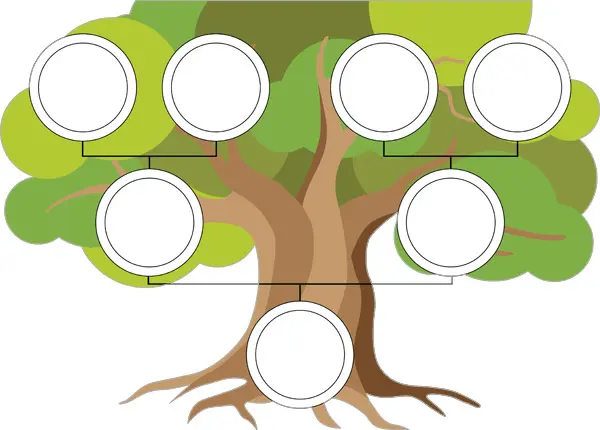
A simple pedigree chart helps here. Fill in what you know with confidence, and leave the rest blank. Those blanks are your actual research questions.
Step 2: Interview Living Relatives Before The Window Closes
Your eldest relatives have information that is unrecorded anywhere else. Maiden names, migration routes, religious beliefs, the name of a village that hasn’t been on a map in 100 years – none of that is in any database. Once those elders are gone, it’s gone.
Ask broad questions. “Tell me about your aunts and uncles” will get you better results than “What were the names of your parents’ siblings?” If possible, record what is said. In any case, take notes. You’re looking for names, dates, places, and relationships, but also for clues as to what kinds of records to look for: a church, a courthouse, a shipyard where your grandfather worked his entire life.
Treat what you get as oral history, not as verified fact. It’s a hint, not a conclusion.
Step 3: Organize Before You Go Any Further
The researchers who get lost are not the ones who can’t find records. They’re the ones who find the same record three times, forget they already have it, and can’t figure out what they’ve actually confirmed versus what they suspect.
Set up a naming convention before you download a single document. Something like Surname\Firstname\Year\DocumentType works fine. The exact format matters less than the consistency. Every file saved the same way means every file findable later.
Keep a separate research log – even a basic spreadsheet – that tracks what you searched, where you searched it, and what you found (including dead ends). A recorded dead end means you don’t repeat it. That’s not a small thing when you’re three years into a project.
Step 4: Search Locally, Not Nationally
Records are generally born and kept locally, in the county, the parish, the municipality. National databases are an excellent starting point, but they consist of local records en masse and are generally incomplete. It’s estimated that about 80% of historical records across the globe have yet to be digitized and made available through the internet in any way (Association of Professional Genealogists). That statistic should readjust your expectations about how much you can find without having to leave the house.
When you are researching a specific geographic region, identify resources that are known for specializing in that area. ldsgenealogy.com is a helpful directory of state-specific holdings and local institutions that aren’t included in the indexes of the larger national players. Courthouses, state archives, and historical societies at the county level regularly maintain unscanned probate, naturalization, and vital records that won’t pop up in any results page.
Tackle one jurisdiction at a time. What records were kept there, through which dates, and where are they now.
Step 5: Verify Everything Against Original Documents
Automated platforms can recommend “hints” that include potential connections copied from other users’ public family trees. These may appear to be quick fixes, but they are not reliable as they are assumptions made by other individuals, which in some cases are based on assumptions of others, and so on, extended several levels deep.
Always retrieve the image of the original document before considering any connection as verified. A hint that matches a name and a year must be verified by a primary source, such as the actual birth, census, or marriage record. If an image is not available, state that clearly and keep looking.
Census records, vital records, and probate records are so important. They are not fancy, but they are detailed. Names, relationships, ages, locations. This is the information you need. Not some family tree someone shared online with no sources.
Real genealogy is slow. One person, one record, one verified connection at a time. The people who continue digging are not the people who chase the coolest story – they are the people willing to document the mundane story well enough that the coolest story becomes solid enough to tell.