


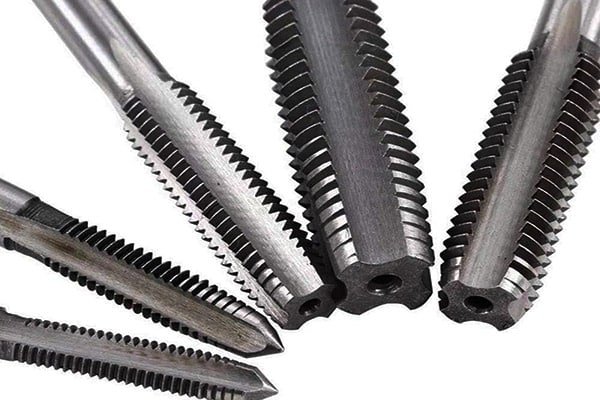
When shops start to rely more on custom tools, they often face a challenge: how to choose a reliable custom cutting tap supplier in the U.S. They need a supplier who can deliver taps that hold up on the floor, not just on paper.
It may sound straightforward until you start comparing manufacturers who all promise precision and durability. But the details behind those promises are not the same.
Therefore, we’ve come up with this guide to help you choose a dependable supplier for your custom cutting taps requirements.
Confirming a supplier’s ability to produce nonstandard thread forms
Some manufacturers stay inside the usual UNC or UNF tools and never touch the more demanding profiles. When you need ACME variants, multi-start threads, or a geometry that sits outside published charts, you need a supplier who does this kind of work frequently.
Ask the makers how they develop thread profiles for custom orders. If you don’t get a satisfactory answer, move on. A reliable supplier will talk about how they model thread clearance, how they manage compound angles, and how they correct form errors before heat treatment.
If the supplier also supports forming taps, it usually means they understand thread flow, pitch control, and material yield in more detail than a basic shop. It gives you one more indicator of technical depth.
Reviewing the supplier’s control over blank preparation
Blank preparation decides how consistent the finished tap will be. Even perfect thread grinding cannot fix a poorly prepared blank. You want to know who is responsible for centerless grinding, what tolerance range they hold, and how they check concentricity between the shank and thread section.
Any hesitation here is a problem. A good supplier will tell you how they manage wheel wear, how many inspection points sit in the line, and how they track offsets. Small things, but they decide whether your custom tap performs the same way on every order.
Assessing geometry development for complex materials
Cutting taps behave very differently depending on the workpiece material. A shop that truly understands geometry development will explain how they adjust rake and relief angles when you move from titanium to nodular iron or from hardened steel to softer alloys.
This is where many suppliers fall short. They offer a standard grind and hope it works for everything. A better supplier will ask for your spindle speed, coolant behavior, hole depth, and exact grade of material. They will not try to force a single geometry across multiple jobs. When you begin hearing questions like these, you know you are dealing with people who understand why taps fail and how to keep them from failing.
Scrutinizing heat treat and stress relief standards
Heat treat problems do not show up until the tap is in the spindle. That is why you need a supplier who controls this step tightly. You should hear explanations about hardness range, retained austenite levels, and how distortion is measured.
Some suppliers outsource heat treatment without tracking microstructure changes, which leads to brittle taps or tools that lose hardness when the job heats up. Your supplier should share details on their furnace cycles, testing process, and how they maintain uniform hardness across the entire batch.
Checking coating selection and pre-coat surface preparation
Coatings are a big part of tool life. Still, coatings only work when the surface underneath is prepared the right way. A supplier who understands this will talk about polish quality, edge prep, and how the coating reacts with thread geometry.
If the team offers only one or two coatings for every job, that shows they are working with a limited understanding. The right supplier will help you select the coating based on RPM, material grade, coolant behavior, and surface finish targets.
Evaluating statistical consistency across production batches
Custom taps need to perform the same way every time. It requires more than careful grinding. It requires statistical control. Ask for sampling data or any form of capability analysis. You want to see how stable their pitch diameter, relief values, and flute spacing are across multiple runs.
If the supplier is reliable, they’ll keep inspection records and can show you variation patterns without scrambling. This gives you confidence that your second order will not behave differently from your first.
Conclusion
Choosing a reliable U.S. supplier for custom cutting taps requires some effort. The real value shows up in repeatability, stability, and engineering support. When you work with a supplier who understands these points, your shop sees fewer surprises and more predictable production.