


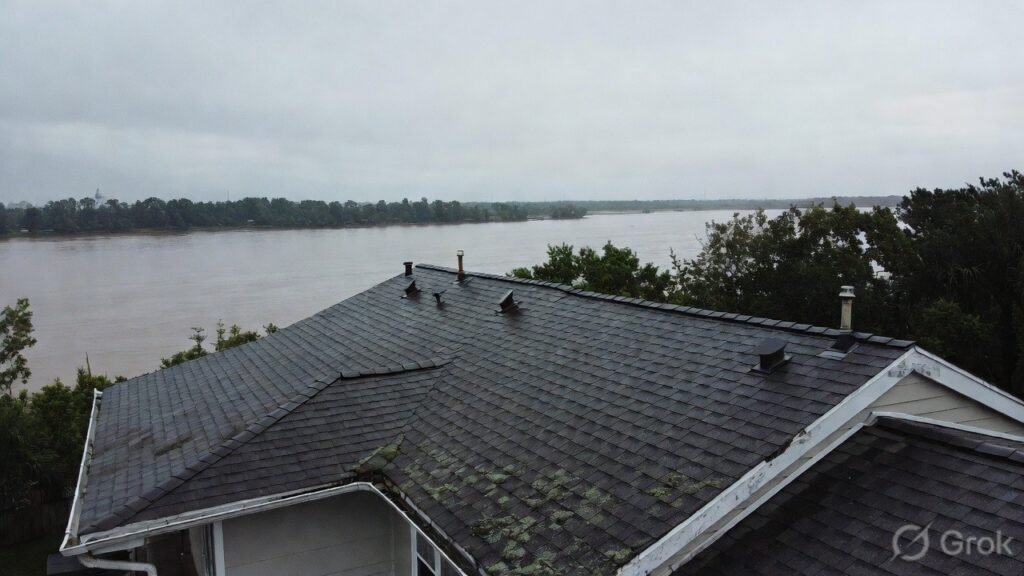
The Mississippi River defines Baton Rouge in countless ways, from the city’s economy to its geography to its very identity. Less visible but equally significant is the river’s influence on the local climate, particularly the humidity that shapes daily life and directly impacts the longevity of roofing systems throughout the region.
Understanding the River Effect
The Mississippi River is more than a transportation corridor and economic engine. It’s a massive thermal reservoir that moderates temperatures and elevates humidity levels across the Baton Rouge metropolitan area. This river effect creates microclimatic conditions that differ significantly from areas just a few miles inland.
Water has a high heat capacity, meaning it absorbs and releases thermal energy slowly. During summer months, the river’s surface temperature remains cooler than the surrounding land, creating temperature gradients that drive atmospheric circulation. As air moves over the warm land and cooler water, moisture evaporates into the atmosphere, elevating humidity levels.
The result is a persistent moisture load that affects everything from human comfort to building performance. Relative humidity in river-adjacent areas regularly exceeds 80 percent, with summer peaks above 90 percent common. This moisture-rich environment creates unique challenges for roofing systems designed to shed water while remaining dry themselves.
How Humidity Attacks Roofing Systems
High humidity undermines roofing performance through multiple mechanisms that work together to accelerate deterioration. Understanding these processes helps homeowners appreciate the importance of humidity-resistant roofing design.
Moisture absorption affects many roofing materials, particularly organic-based products like asphalt shingles. When humidity levels remain elevated, these materials absorb atmospheric moisture, causing dimensional changes that stress adhesive bonds and create pathways for further moisture intrusion.
The combination of heat and humidity creates an accelerated aging environment for roofing materials. Chemical reactions that degrade asphalt, rubber, and other roofing compounds proceed faster at higher temperatures. The presence of moisture catalyzes many of these reactions, creating a synergistic effect that dramatically shortens material lifespan.
Mold and algae growth thrives in humid conditions, particularly on roofing surfaces that remain shaded or damp. These biological growths not only affect appearance but can actually degrade roofing materials through chemical secretions and physical attachment. Dark streaks on shingles often indicate algae colonization that is actively breaking down the protective granule coating.
Wood components in roofing systems are particularly vulnerable to humidity damage. Roof decking, fascia boards, and structural framing absorb moisture from humid air, creating conditions that promote rot and insect infestation. Once wood moisture content exceeds 20 percent, decay organisms become active and begin breaking down cellulose structures.
The Attic Environment
The space beneath your roof, the attic, experiences the most extreme humidity conditions in your home. Summer temperatures can exceed 150 degrees Fahrenheit, while humidity levels approach saturation. This harsh environment tests every component of your roofing system.
Inadequate ventilation traps humid air in the attic, creating persistent damp conditions that damage roofing materials from below. Moisture that enters through air leaks or vapor diffusion accumulates on the underside of roof decking, promoting mold growth and wood decay.
Air conditioning ductwork in attics creates additional humidity challenges. Cool duct surfaces cause moisture to condense from humid attic air, creating localized wet spots that damage surrounding materials. This condensation can be substantial, with some homes generating gallons of water daily during peak summer conditions.
The stack effect, driven by temperature differences between indoor and outdoor air, draws humid outdoor air into the attic through soffit vents and other openings. Without adequate exhaust ventilation, this moist air accumulates and creates the humid conditions that damage roofing systems.
Material Selection for Humid Climates
Choosing roofing materials suited to humid conditions is essential for maximizing roof lifespan in Baton Rouge. Not all products perform equally well in moisture-rich environments.
Metal roofing offers excellent humidity resistance, as it doesn’t absorb moisture and provides no food source for biological growth. Modern metal roofing with quality coatings resists corrosion even in salt-air environments near the river. The smooth surface sheds water effectively and doesn’t support algae or moss growth.
Synthetic roofing materials, including polymer-based shingles and tiles, provide good humidity resistance while replicating the appearance of traditional materials. These products don’t absorb moisture and resist biological growth, making them well-suited to Baton Rouge’s climate.
When selecting asphalt shingles, look for products specifically formulated for humid climates. Algae-resistant granules help prevent the dark streaking common in river-adjacent areas. Higher-quality products with better asphalt formulations resist moisture absorption and thermal degradation more effectively.
Ventilation Strategies
Proper attic ventilation is the most important factor in managing humidity’s impact on roofing. A well-designed ventilation system removes humid air before it can damage roofing materials while reducing cooling costs and improving comfort.
The basic principle is simple: intake vents at the soffit allow cooler outdoor air to enter the attic, while exhaust vents at the ridge allow hot, humid air to escape. This continuous airflow removes moisture and heat, creating conditions that protect rather than damage roofing materials.
Ventilation requirements for humid climates exceed those for drier regions. While general guidelines suggest one square foot of ventilation per 300 square feet of attic floor area, homes in Baton Rouge benefit from more aggressive ventilation. Doubling these rates provides better humidity control and improved roof longevity.
Powered ventilation options, including solar-powered attic fans, can enhance natural ventilation during periods of extreme heat and humidity. These systems supplement passive ventilation to maintain acceptable attic conditions even when outdoor air is hot and moist.
Maintenance in Humid Environments
Regular maintenance takes on added importance in humid climates. Tasks that might be optional elsewhere become essential for roof longevity in Baton Rouge’s moisture-rich environment.
Gutter cleaning prevents water backup that can damage roof edges and fascia. In humid conditions, even brief periods of standing water can initiate decay processes that compromise roofing components. Quarterly gutter maintenance is recommended for homes near the river.
Tree management reduces shade that promotes moss and algae growth on roofing surfaces. Trimming overhanging branches allows sunlight to reach roof surfaces, helping to dry moisture and inhibit biological growth. This is particularly important on north-facing roof slopes that receive limited direct sun.
Professional inspections identify developing problems before they cause significant damage. A qualified roofing professional can assess ventilation adequacy, check for moisture damage, and recommend improvements to extend roof lifespan in humid conditions. For property owners managing larger buildings, timely commercial roof repair Baton Rouge services are especially important to prevent humidity-related damage from spreading across large roofing surfaces.
The Investment in Protection
Addressing humidity’s impact on roofing requires investment in quality materials, proper design, and ongoing maintenance. While these investments add to upfront costs, they pay dividends through extended roof lifespan and reduced repair frequency.
Consider the total cost of ownership when evaluating roofing options. Products that cost more initially but resist humidity damage may prove more economical over their service life. Factor in the cost of more frequent replacements and repairs when comparing lower-priced alternatives.
Energy savings from improved ventilation and reflective roofing materials help offset investment costs. Reduced cooling loads during Baton Rouge’s long summers translate to lower utility bills that continue throughout the roof’s lifespan.
The Mississippi River will continue shaping Baton Rouge’s climate for generations to come. By understanding and addressing the humidity challenges this creates, homeowners can protect their roofing investments and enjoy reliable performance despite the river’s influence. Quality materials, proper ventilation, and regular maintenance combine to create roofing systems that stand up to Louisiana’s demanding environment.