


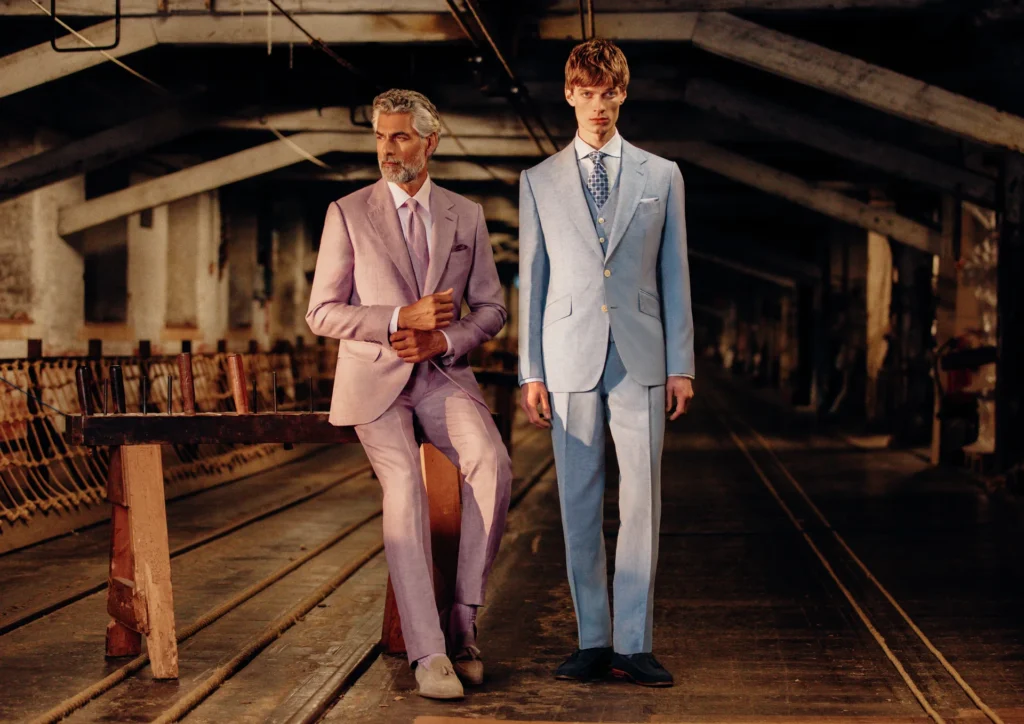
A capsule wardrobe isn’t a minimalism project. For a serious professional, it’s a strategic asset – one that should be built with the same discipline you’d apply to any high-performing portfolio. The goal is a small number of pieces that work hard across every professional context, hold their value over time, and project exactly the right authority in the room.
Start With Construction, Not Branding
Most individuals who shop for luxury goods still tend to purchase branded items. This approach is flawed. The aspects that truly indicate high quality are not even considered by most people. For example, a suit jacket with a full-canvas construction has a layer of horsehair interlining that is sewn by hand through the chest of the jacket and will adapt to your body over the years.
A jacket with a fused construction will not, regardless of the label’s price tag. Other indicators you should be aware of include lapel edges that are hand-rolled, buttons made of natural horn, and pick-stitch details along the collar. These details are not added for visual appeal but rather indicate construction techniques that require time and higher costs to be implemented correctly.
74% of luxury fashion goods consumers prioritize durability and timeless design over seasonal trends in their purchasing decisions (McKinsey & Company). We can confirm this by our own experiences: the items that maintain their value are the ones designed to do so.
The 12-Piece Foundation
A professional capsule that delivers needs precise pieces, not a ton of them.
The game-changer formula: two navy and charcoal suits, three white and pale blue dress shirts, two neutral-colored merino knitwear, two pairs of tailored trousers, one trench, and two premium leather shoes – one Oxford, one ever-so-slightly more casual for smarter casual situations. Get it right, and this 12-piece kit will give you over 30 outfits, none of which will ever feel contrived or overused.
Navy and charcoal are non-negotiable. A monochromatic color frame based on these two hues means you never have to consciously work at making each outfit look well-composed. The suit does most of the heavy lifting: it’s the biggest purchase, the one item that you’ll likely invest the most in, and the centerpiece all the other items orbit.
When it comes to the navy suit, the fabric trumps almost all other decision-making. Gieves & Hawkes, one of the grand institutions of the Row, is the kind of investment that repays its debt many times over a decade after you make it, not just because of the cut or aesthetic, but because of the physical structure of the fabric. A suit that’s constructed in the proper sense of the word will hold over the course of hundreds of wears in a way that a mass-manufactured suit simply won’t.
The High-Low Methodology
The way we dress for work has changed. The spectrum of formal wear and the rise of the ‘creative professional’ has meant that the most effective wardrobes shift seamlessly between the two, without needing an entire set of clothes for each end.
The trick is simple: keep the suit jacket the same, and change what’s underneath. A white, structured, crisp shirt beneath a charcoal suit jacket reads as your classic corporate look. The same jacket with a slim merino turtleneck in slate grey reads as high-powered creative, authoritative yet inherently relaxed. Swap out the turtleneck for a premium cotton T in the right workplace and you’ve ventured further down the spectrum, leaving the jacket’s authority fully intact.
This is what that whole capsule thing actually gets right. Not less clothes, but more out of what you have.
Fit is the only luxury that can’t be faked
A suit that’s expensive and doesn’t fit well is a liability, not an asset.
The shoulder seam should rest on the edge of your shoulder. The jacket should be able to button without tugging at the chest area. The trouser break is up to you (some men prefer no break at all), but it should be a conscious decision, not just taking what you get off the rack. None of this is achievable off the rail without adjustment.
You will need a good relationship with your tailor. This isn’t optional, it’s the final step in every purchase. And, in many cases, a made-to-measure piece will need tweaking. But that’s okay, the extra price for solid alterations is still a part of the overall cost of quality tailoring.
With bespoke, the fitting does all of the above. With ready-to-wear or made-to-measure, you should add your tailoring budget to the final price of the garment from the beginning of your purchase.
Maintaining What You’ve Built
Quality clothing needs proper care to maintain its integrity and longevity. Rotate your most-used shoes to avoid wearing them out too fast, and insert cedar trees after each wear to help remove moisture and maintain the shape of the shoe. Dry cleaning uses powerful chemicals that slowly break down fabrics and shorten lifespans. Instead, try spot cleaning and hanging your clothes in a humid room for a day.
Most stains will simply evaporate away. Wool garments can be easily refreshed by hanging them in a misty bathroom while you shower. Most wrinkles will then smooth out as the heat relaxes the fibers. The added bonus is that wool clothes will, with rarely an exception, look totally amazing straight after 10 minutes in the sumptuous steam room.
Items like suits should be stored with cedar blocks or rings instead of mothballs. Suits should be hung on wide, shaped hangers; a good suit almost shapes its own perfect shoulders when hung correctly. Folded suits, left in luggage or stacked, will lose their shape more quickly than almost anything else you own.
Remember, the point of a luxury capsule is to not only buy but care rightly for the pieces that will last. That’s the only way the math makes sense.