


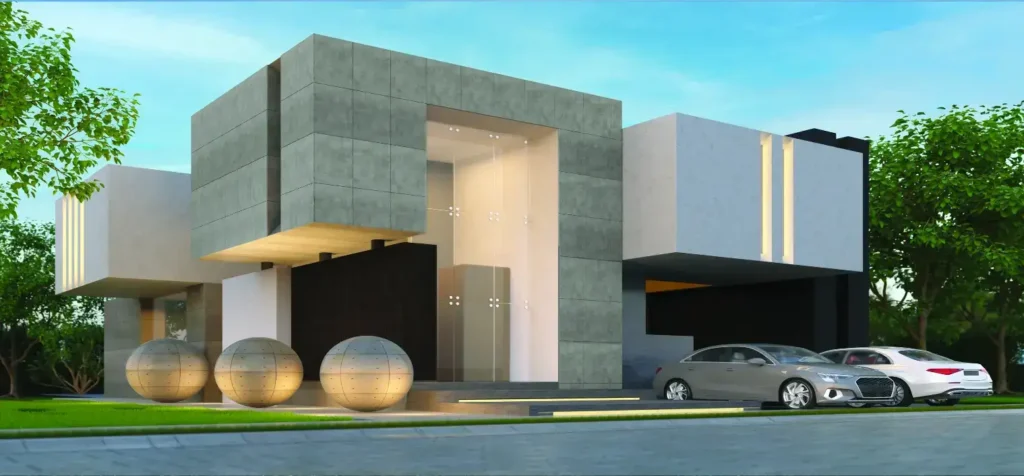
Commercial construction decisions in the United States rarely happen in isolation. Every material choice carries downstream consequences — for building performance, maintenance schedules, code compliance, and long-term ownership costs. Cladding is one of those decisions that often gets treated as a finishing detail, when in reality it functions as the building’s primary interface with weather, temperature fluctuation, moisture, and physical wear.
For project owners, developers, and general contractors managing mid-to-large commercial builds, selecting the wrong exterior cladding system doesn’t just affect aesthetics. It affects insulation performance, structural integrity over time, and the frequency of remediation work that follows occupancy. Getting this decision right at the planning stage is significantly more cost-effective than correcting it after installation.
This framework is designed to help commercial stakeholders work through the selection process in a structured, practical way — starting with building context and ending with contractor and system compatibility.
Understanding What Cladding Actually Does in a Commercial Context
Cladding is the outer layer of material applied to the exterior of a building’s structural frame or substrate. It does not bear structural loads in most applications, but it plays a direct role in how a building manages environmental exposure, thermal movement, and air and moisture infiltration. Well-specified cladding solutions create a controlled barrier between interior conditions and the exterior environment, which has a direct effect on energy consumption, occupant comfort, and the long-term condition of underlying structure.
In commercial construction, this matters more than in residential work because the scale of exposure is greater, the occupancy requirements are stricter, and the consequences of system failure are more expensive to address. A cladding failure on a 12-story office building is not a localized repair — it often requires scaffolding, inspection of the substrate, moisture remediation, and recladding across entire elevations.
Understanding the full functional role of the system before specifying it is the starting point of any sound selection process.
The Difference Between Aesthetic and Functional Specification
Many commercial projects begin cladding discussions with appearance in mind — color, texture, and the visual language of the building. Those are legitimate considerations, but they should follow, not precede, the functional specification. A cladding material that performs poorly in freeze-thaw cycles, or that requires frequent recoating in high-humidity coastal environments, will create ongoing maintenance obligations regardless of how it looks on day one.
Functional specification means selecting materials based on the specific climate conditions the building will face, the expected lifespan of the system relative to the building’s use cycle, and the maintenance capacity of whoever will manage the property after completion. These factors narrow the field considerably before aesthetics even enter the conversation.
Assessing the Building’s Environmental and Operational Exposure
Commercial buildings across the United States face dramatically different environmental conditions depending on location. A distribution center in Phoenix operates in intense UV exposure and extreme temperature ranges. A mixed-use building near Boston faces freeze-thaw cycles, road salt migration, and substantial wind-driven rain. A coastal hospitality property in Florida contends with salt air, high humidity, and frequent tropical weather events. Each of these environments requires a different approach to exterior cladding.
The American Society of Civil Engineers publishes wind and weather loading standards that inform how building envelopes, including cladding systems, should be specified for different geographic and use conditions. These standards exist because environmental loads on commercial buildings are not uniform, and treating them as such leads to underperforming systems.
Climate Zone as a Starting Filter
The US Department of Energy’s climate zone map divides the country into distinct regions based on temperature, humidity, and precipitation patterns. This zoning system is used by building code bodies and energy standards organizations to determine envelope performance requirements. For cladding selection, the climate zone tells you what moisture management challenges you’re working with, how much thermal expansion and contraction the system will need to accommodate, and whether vapor barriers or rain screen gaps are required between the cladding and the underlying wall assembly.
In humid climates, for example, failing to include a proper drainage plane behind the cladding can trap moisture against the substrate, leading to mold, rot in wood-framed structures, or corrosion in metal-framed ones. In dry climates, the concern shifts toward cracking, sealant degradation, and UV-related material breakdown. Climate zone is not a technicality — it is a primary selection driver.
Building Use and Occupancy Type
The function of the building matters independently of its location. A food processing facility has different cladding requirements than a Class A office tower. Industrial buildings may prioritize impact resistance and chemical compatibility. Healthcare facilities often have strict requirements around cleanability and moisture control at grade level. Retail buildings may prioritize fast installation and the ability to update branding without full cladding replacement.
Understanding occupancy type helps define which performance attributes should be weighted most heavily in the selection matrix — and helps avoid specifying systems that are technically sound in one context but inappropriate for another.
Evaluating Material Options Against Real Project Constraints
Once the environmental and functional parameters are established, the material evaluation phase becomes more straightforward. The most common commercial cladding materials in the US market include composite panels, fiber cement, metal panel systems, masonry veneers, and glass curtain wall systems. Each has a distinct performance profile, installation profile, and maintenance expectation.
Composite aluminum panels, for instance, offer excellent flatness, low weight, and good weather resistance, but they require careful detailing at joints to prevent moisture ingress and are sensitive to improper installation at corners and transitions. Fiber cement is more dimensionally stable than wood but heavier, and it must be properly primed and finished to perform as intended in wet climates. Masonry veneers are durable and low-maintenance but require a competent installation team and careful attention to tie spacing and drainage.
Life Cycle Cost Versus Installed Cost
The budget conversation around cladding almost always focuses on installed cost — the material plus labor to put it in place. This is understandable from a cash flow perspective, but it often leads to decisions that cost more over the building’s life than the premium alternatives would have. A lower-cost cladding system that requires repainting every five years, or that requires section replacement after ten years due to moisture ingress, may cost more in aggregate than a more durable system installed correctly at the outset.
Life cycle cost analysis for cladding should account for expected maintenance intervals, the cost of that maintenance at height (scaffolding, access equipment), the likelihood of substrate damage if the cladding system fails, and the cost of disruption to building occupants during remediation work. For owner-occupied or long-held investment properties, this analysis almost always favors higher-performance systems.
Lead Times and Supply Chain Reliability
In the current US construction environment, material lead times are a genuine project risk. Some cladding systems — particularly custom composite panels, specialty metal finishes, or glazing systems — can carry lead times of sixteen to twenty-six weeks or more. Failing to account for this in the project schedule creates real risk of construction delay, which carries its own financial consequences.
When evaluating materials, project managers should confirm current lead times with distributors early in design development, not during the procurement phase. Where schedule risk is high, specifying materials with shorter lead times or domestic supply chains may be the more prudent choice even if the ideal material preference points elsewhere.
Contractor Competency and System Compatibility
A well-specified cladding system installed by an under-qualified contractor will underperform against a moderately specified system installed by a team with proven experience in that system. This is one of the most consistent patterns in commercial construction. Cladding installation is not generic — different systems have specific requirements for substrate preparation, fastening patterns, joint detailing, and sealant application. Errors at any of these points create performance gaps that may not manifest until months or years after completion.
Before finalizing a cladding specification, it is worth verifying that qualified installers are available in the project’s market. Some systems require manufacturer-certified applicators. Others are common enough that regional availability is not a concern. Understanding the local contractor pool during the design phase helps avoid the situation where a system is specified correctly but cannot be installed correctly because no qualified contractor is available or willing to bid.
Warranty Structure and Manufacturer Support
Commercial cladding warranties vary considerably in what they actually cover. Material warranties cover defects in the product itself. Application warranties, where they exist, cover failures related to installation. Some manufacturers offer system warranties that cover both, but only when the product is installed by a certified contractor using manufacturer-approved accessories and substrates.
Understanding the warranty structure before specifying a system protects the owner and the project team from situations where a failure occurs but warranty coverage is voided due to a contractor substitution or accessory incompatibility. This is particularly relevant on fast-moving projects where value engineering decisions are made late in the process without full visibility into warranty implications.
Bringing the Framework Together Before Breaking Ground
Selecting the right cladding system for a US commercial project is not a single decision — it is a sequence of decisions that builds from environmental context through functional specification, material evaluation, and contractor qualification. Each step narrows the field and grounds the final selection in real conditions rather than preference or habit.
The projects that experience the fewest cladding-related issues post-occupancy are typically those where this sequence was followed deliberately, with input from the design team, the general contractor, and the owner’s facilities or asset management staff. The projects that experience the most issues are usually those where cladding was treated as a late-stage specification or a value engineering target without full consideration of the downstream consequences.
Working with experienced cladding contractors who understand both the system requirements and the local environmental conditions is an important part of executing this framework successfully. Firms that specialize in commercial exterior work bring a practical perspective that complements the design team’s specifications — catching constructability issues before they become field problems.
The framework outlined here does not guarantee a perfect outcome, but it creates the conditions for an informed one. In commercial construction, that is usually the difference between a building that performs as designed and one that generates callbacks, remediation costs, and difficult conversations with ownership.