


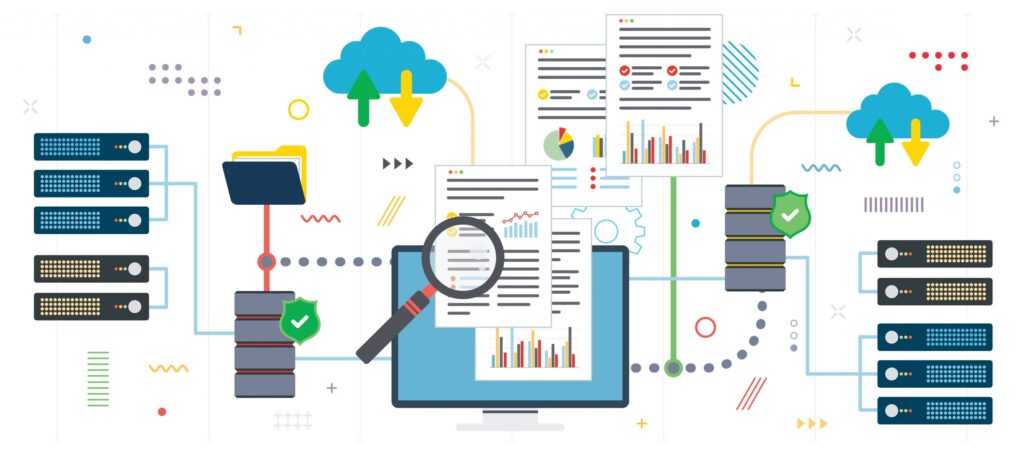
Most business leaders who deal with data problems are not struggling because they lack access to information. They are struggling because the information they need exists in formats, systems, or locations that make it difficult to use. A supplier’s product catalog lives in a PDF. Competitor pricing updates daily on a website. Customer records are spread across three separate platforms that do not communicate with each other. The data is there. Getting it into a usable state is the actual problem.
This is the operational reality that has made structured data extraction a growing priority across industries in the United States. From procurement teams trying to consolidate vendor data to operations managers who need reliable feeds from multiple sources, the demand is not technical in nature. It is practical. Decision-makers need clean, structured, and timely data to do their jobs. How that data gets extracted, processed, and delivered is where the complexity lives — and where the right service or approach can make a significant difference.
This guide is written for professionals who oversee these decisions but do not have technical backgrounds. It covers what data extraction actually involves, what types of extraction exist, how to evaluate whether a service is reliable, and what operational risks to account for when building or outsourcing an extraction workflow.
What Data Extraction Actually Involves
Data extraction is the process of pulling structured or usable information from a source — a website, document, database, API, or file — and transforming it into a format that a business can store, analyze, or act on. This Data Extraction Services guide provides a deeper operational overview for teams evaluating their options, but the core idea is straightforward: raw information gets converted into organized data. The challenge is that raw information rarely arrives in a clean, consistent form.
The extraction process typically involves three stages. First, the source is accessed — whether that is a live website, a static file, a database connection, or an application programming interface. Second, the relevant data is identified and isolated from surrounding content. Third, that data is structured and delivered in a format the receiving system can use, such as a spreadsheet, database table, or JSON file.
Why Source Complexity Matters More Than Volume
Many decision-makers assume that the difficulty of extraction scales with how much data needs to be collected. In practice, complexity is a bigger challenge than volume. A single poorly structured source — a website that changes its layout frequently, a PDF that uses inconsistent formatting, or a database with no documentation — can require significantly more effort than collecting large amounts of data from well-organized sources.
This is important to understand when scoping an extraction project. A vendor who quotes quickly on volume without assessing source complexity may be underestimating the real work involved. Source variability, authentication requirements, anti-scraping protections, and inconsistent formatting all increase the effort required to deliver reliable output. Teams that do not account for this often discover that their extracted data requires significant manual correction, which defeats the purpose of automating the process in the first place.
The Main Categories of Data Extraction Services
Not all data extraction is the same, and different business needs call for different approaches. Understanding the general categories helps decision-makers ask the right questions when evaluating options and avoid being sold a solution designed for a different type of problem.
Web-Based Extraction
Web extraction, often called web scraping, collects data from publicly accessible websites. This is commonly used for price monitoring, competitor research, product catalog aggregation, and market intelligence. The reliability of this approach depends heavily on how stable the target websites are and whether those sites permit or actively block automated data collection.
Websites change. Navigation structures shift, elements get renamed, and pages are redesigned. A web extraction setup that works reliably today may break within weeks without maintenance. For businesses that depend on frequent, accurate web data, this maintenance burden is often underestimated. A well-built extraction service will include monitoring and repair as part of its ongoing operation, not as an add-on.
Document and File Extraction
This category covers pulling structured data from PDFs, Word documents, spreadsheets, images, and scanned forms. Industries that deal heavily in contracts, invoices, technical specifications, or compliance documents often need this type of extraction to reduce manual data entry and improve the speed of internal processes.
The challenge here is that documents were designed for human readers, not automated systems. Layout variations, inconsistent labeling, and mixed content types — text alongside tables alongside images — all require more sophisticated processing. Optical character recognition, or OCR, is often involved when documents are image-based rather than text-based, and the quality of that recognition affects data accuracy in ways that can create downstream errors if not properly validated.
Database and API Extraction
When data lives inside a software system — an ERP platform, a CRM, a third-party application — extraction typically happens through direct database queries or API connections. This is often the most reliable form of extraction because the data is already structured and the connection is intentional. According to standards maintained by the National Institute of Standards and Technology, interoperability between data systems depends on consistent, well-documented interfaces, which API-based extraction methods are designed to use.
However, API access comes with its own constraints. Rate limits control how much data can be pulled at once. Authentication protocols must be maintained. API versions change, and older connections can break when vendors update their systems. For businesses integrating data from multiple software platforms, managing these connections is an ongoing operational task, not a one-time setup.
Evaluating Reliability Before You Commit
Reliability is the central concern for any team that depends on extracted data to make decisions or run operations. An extraction setup that delivers data inconsistently — late, incomplete, or incorrectly formatted — creates more problems than it solves. Before committing to a provider or internal build, there are practical questions worth asking.
How Is Data Quality Verified?
Data quality verification is not the same as data delivery. A system can successfully collect and deliver data that is still inaccurate, out of date, or structurally inconsistent. Quality verification means that the extracted output is checked against expected formats, completeness standards, and known reference points before it is passed to downstream systems.
This is particularly important when extraction feeds into automated workflows. If pricing data extracted from a supplier website contains formatting errors and feeds directly into a purchasing system, the result could be incorrect orders processed without human review. Quality checkpoints — automated or manual — are a structural part of any reliable extraction operation, not an optional enhancement.
What Happens When the Source Changes?
Sources change without warning. A website redesign, a new document format, an API version update — any of these can break an extraction process that was working correctly. For teams that rely on data extraction services as an ongoing operational input, the question of how change is handled is more important than how the system was originally built.
A provider or internal team that has no defined process for detecting and responding to source changes will deliver a system that requires constant reactive attention. The better approach is one that includes change detection, alerting, and a clear response protocol that specifies how quickly issues will be identified and resolved, and what contingencies exist when data cannot be collected on schedule.
Operational Risk and When Outsourcing Makes Sense
Building data extraction capabilities internally is possible for organizations with dedicated technical teams, but it involves ongoing costs that are not always visible at the start. Development time, infrastructure maintenance, monitoring, debugging, and adaptation to source changes all require sustained attention. For teams whose primary function is not data engineering, these costs compete with other priorities.
The Case for Managed Extraction Services
Managed data extraction services transfer the operational burden of building and maintaining extraction pipelines to a specialized provider. The advantage is not primarily cost — it is continuity and expertise. A provider whose entire operation is built around extraction has more experience handling source variability, authentication challenges, and format inconsistencies than most internal teams will develop through occasional projects.
The tradeoff is control. When extraction is handled externally, the business depends on a third party for a critical data supply. Clear contractual expectations around uptime, delivery schedules, data format specifications, and issue resolution timelines are essential. Businesses that do not define these expectations in writing often find that a provider’s definition of “reliable” differs from their own operational requirements.
Knowing When Internal Build Is the Right Choice
There are situations where building extraction internally is the correct decision. When the data sources are internal systems that a vendor cannot access, when the data is sensitive enough that external handling creates compliance concerns, or when the extraction logic is simple enough that an internal team can maintain it without significant ongoing effort, an internal approach may be more appropriate.
The key question is not which option sounds better in the abstract, but which one will actually be maintained and monitored over time. An internal extraction build that gets deprioritized after launch is a liability, not an asset. Honest assessment of internal capacity is more useful than theoretical comparisons between in-house and outsourced approaches.
Bringing It Together: What Non-Technical Leaders Should Own in This Process
The technical details of data extraction — how systems connect, how data is parsed, how pipelines are built — belong to the people who build and maintain them. But the decisions that shape whether an extraction effort succeeds are not technical. They are operational and organizational.
Decision-makers who are not technical should take ownership of three things. First, defining what “reliable” means for their specific operation — how often data needs to be updated, what level of accuracy is acceptable, and what the business impact of a data outage would be. Second, ensuring that quality and continuity expectations are clearly documented before any build or vendor engagement begins. Third, maintaining visibility into extraction performance over time, so that problems are identified early rather than discovered after they have already affected operations.
Data extraction is infrastructure, not a project. It requires the same ongoing attention as any other operational dependency. Leaders who treat it that way from the start are in a much better position to get consistent value from it.
Conclusion
For US-based organizations navigating data-heavy operations, structured extraction is no longer a niche technical concern. It is a practical business function that affects how quickly teams can access the information they need, how accurately that information reflects reality, and how much manual effort is required to keep data flowing across systems and workflows.
Non-technical decision-makers do not need to understand the mechanics of how extraction works. They do need to understand what questions to ask, what risks to plan for, and what accountability looks like when extracted data is a dependency rather than a convenience. Whether the approach is outsourced or built internally, the organizations that get the most from data extraction are the ones that treat it with the same seriousness they would apply to any other critical operational process.