
What to Do When Your Glasses Break: An Emergency Guide to Quick Replacements and Repairs

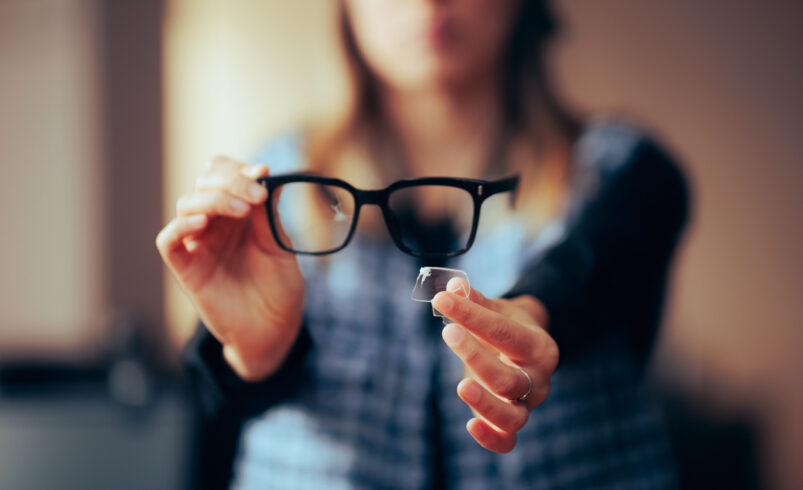
Your glasses snap in half at 7am and suddenly you can’t read your phone, find your keys, or safely drive to work. About 64% of adults wear prescription eyewear, which means this exact scene plays out in bathrooms and parking lots every single day. The good news is that a broken pair rarely means you’re stuck without clear vision for long, as long as you know which of five or six things actually went wrong and what order to tackle them in.
First, figure out what actually broke
Not all breaks are equal, and the fix depends entirely on which part failed. Take thirty seconds before you do anything else and identify the damage type.
A cracked or scratched lens is a different problem than a snapped bridge. A loose hinge is a different problem than a stripped screw. A missing nose pad is barely a problem at all. Each of these has its own repair path, and guessing wrong wastes time you don’t have.
Common failure points include:
- Lens damage – cracks, deep scratches, or a lens popping out of the frame
- Snapped bridge – the piece connecting the two lenses, often unfixable without replacement
- Hinge or temple damage – the most frequent break point on any pair of glasses
- Stripped or missing screws – usually fixable in minutes with the right tool
- Lost or broken nose pads – cosmetic and comfort issue, rarely urgent
Once you know what you’re dealing with, you can stop panicking and start making decisions.
Safe temporary fixes (and the one thing to never do)
If you must keep going for a few more hours before you can reach an optical shop or a professional who can unscrew that hinge and pop in a new one, there are better options. A small eyewear repair kit with spare screws and a mini screwdriver is a stealth solve for a loose hinge. It can look good as new. After decades in this business, we still love the paperclip. Bend it over a few times until it breaks, then loop it gently around the loose hinge. It won’t catch in your hair. It won’t poke you in the temple. It’s genius and we don’t know why it’s not included in every pair of glasses case on Earth.
Here’s the part that matters most: never use superglue near your lenses. Ever. The fumes from cyanoacrylate adhesives react with anti-reflective and anti-scratch coatings and cloud them permanently, even if the glue itself never touches the lens surface. We’ve seen people ruin a perfectly good pair of lenses trying to fix a frame, turning a $40 hinge repair into a full lens replacement. Tape and a repair kit are stopgaps. Superglue is a second emergency stacked on top of the first.
In-person versus online: the real tradeoff
Once you have a valid prescription and know your PD, you have two options, and the appropriate one will depend on how urgently you need a new pair of glasses.
Online retailers are cheaper – sometimes much cheaper – and convenient if you’re not in a rush. But they require you to supply an accurate PD, and you won’t have your new specs within a few hours – or even a few days for the expedited orders. There are no on-face adjustments and no feedback from anyone that they “look nice on you”. If the PD is off by less than two millimeters, or the prescription is wrong, you won’t know until your new specs turn up and something feels off.
An in-person optical retailer with an on-site lab is the other option when you just can’t function without your glasses. A same day glasses provider can confirm your prescription, accurately measure your PD, edge new lenses, and assemble the finished pair to your face in a matter of hours. You pay a bit more for that speed and certainty, but if you’re currently squinting at your phone through a cracked lens, the math usually favors getting it right the first time rather than gambling on an online order and a second day of blurry vision. Before finalizing any order, consider these tips below.
Check your warranty before you pay for anything
Before you spend a dime, try to recall how long you’ve had your frames and who manufactured them. Many designer labels will warrant those screw-mounts or hinges for 12 to 24 months, and a surprising number of folks don’t understand the guarantee covers the replacement regardless of whether the damage occurred from normal usage rather than an obvious wreck.
Unearth the receipt or the logo inscribed inside the temple arm. If you purchased from an eye doctor instead of some shady webshop, 60 seconds on the horn with the original seller can inform you if this is a no-cost fix or a “hmm, think I’ll just get a new pair” situation. It’s a 5-minute phone call that often spares you the full replacement cost of a new set of specs.
Why DIY repairs usually backfire
We understand the urge to save on some expenses and try to repair or adjust glasses yourself, but the reality is that you may cause more harm than good. Here’s why. It’s easier to attempt fixing your eyeglass frames since it seems quite simple on the surface. However, messing with the delicate adjustments of your glasses incorrectly can result in irreparable damage. For instance, heating up a frame to try to bend it back can melt the coating, and an ineffective soldering attempt can damage a hinge beyond fixing. The more you mess with a pair of glasses, the more likely a professional is to deem them unrepairable when you finally do throw in the towel. That often means going back to spending money, which was exactly what you were trying to avoid.
If your lenses survived, you’re in good shape
Here’s something that upsets a lot of people. Quite often, if the lenses themselves are undamaged, you don’t need new lenses. An optical lab can typically pull the lenses out from your broken frames and edge them right into your new pair. It’s usually your fastest, least-expensive solution.
Why? Because cutting and fitting a lens from the beginning takes longer than the one that’s already been ground to your prescription and is safely encased in the old frame. (Which is a good thing, too, because do you have any idea how expensive replacement lenses can be if they’re not being covered by insurance?)
Some opticians don’t even volunteer this information until you pressure them about the cost of new lenses in addition to new frames. Give them a call and ask specifically if they can re-use your current lenses. It’s not a service that is always highly advertised, but most labs are set up to do this if it is at all possible.
The prescription problem nobody thinks about until it’s urgent
Same-day replacement of any kind depends on one thing: having a current, unexpired prescription in hand. If yours expired six months ago, that “quick fix” just turned into a multi-day process that starts with booking an eye exam.
If you have a pair of old glasses lost in the sands of time, your first step is retracing your online orders from when you bought your last pair. There is a very good chance you’ll locate your pupillary distance there, solving the one critical unknown in “I know how to see, just give me my glasses.” Most other stats you can find in a frame’s arm or on the inside of its nose bridge.
Also worth noting: call ahead and ask two questions before visiting any shop. Does this location offer in-house eye exams, and does it have on-site lens edging? If both answers are yes, you can potentially go from expired prescription to functioning glasses in a single visit. If either answer is no, budget extra time.
Don’t skip the insurance check
Before you approve a repair or replacement, look at the benefits your vision plan offers. Many plans will cover the cost of an emergency frame replacement, give you a discount on a complete second pair, or include an accident and breakage rider that almost everyone forgets they have until they need it.
And that second pair angle is worth a second look too. If your plan discounts a backup pair, order one now. It insures against the next emergency and turns a bad day into a permanent fix for future bad days.
Upgrade your lenses while you’re at it
If you’re going to need new lenses in a frame and your lifestyle can be tough on glasses, consider asking for polycarbonate or Trivex materials along with an anti-reflective coating. They are both lightweight, and up to 10 times more impact-resistant than plastic, effectively turning your glasses into safety goggles. That’s a small upsell compared to the price of the lenses you were going to buy anyway.
Insist on a proper fitting before you leave
No matter which repair or replacement option you choose, ensure that you do not leave the store before someone fits the frame directly to your face. If the lenses are not straight, the nose pads are uneven, or the temples are too loose or tight, these will cause you a headache in a day or less, whether or not the prescription is correct.
A good optician will do this immediately and at no additional cost. It only takes two minutes and the difference is glasses that fit your face perfectly and glasses that you always have to push up your nose.
Build your next emergency out of existence
The solution is not to get your glasses fixed more quickly. It’s to engage in proactive prescription management, ensuring that the next time your glasses break it’s only a sixty-minute errand, not a day-long emergency. Store your most recent prescription and your PD measurement somewhere you can access easily. Just keep them handy in a phone note or an email to yourself. Store an old but still current pair somewhere as a backup in your car, at your desk, or in your bag.
The difference between “annoying inconvenience” and “day-long emergency” is almost always just whether you had that information handy before you needed it! Broken glasses are an inevitability at some point. Being unprepared for them isn’t.