The Complete Demolition Rental Equipment Guide Every US Contractor Needs Before Starting a Job

Before any demolition project breaks ground, the decisions made during planning tend to define everything that follows. Which equipment will be on-site, how long it will be needed, who is responsible for maintaining it, and whether it matches the scope of work are not administrative details. They are operational decisions that directly affect job safety, schedule reliability, and cost control.
Across the United States, contractors working on commercial teardowns, residential renovations, industrial dismantling, and infrastructure removal face a common challenge: they need access to specialized, heavy equipment for defined windows of time without the capital commitment of ownership. The rental model addresses that need, but only when the contractor understands how to use it correctly. A poorly selected machine, a misaligned rental term, or an overlooked maintenance responsibility can stall a job or create liability where none was expected.
This guide addresses the full scope of what contractors need to think through before renting demolition equipment — from understanding what different machine categories are suited for, to managing logistics, safety compliance, and site-specific conditions.
What Demolition Rental Equipment Actually Covers
The term “demolition rental equipment” is broader than most contractors initially assume. It is not limited to excavators with hydraulic attachments. It spans a range of machines and tools designed for controlled structural removal, material processing, and site preparation — each with distinct capabilities, limitations, and ideal use cases. Contractors who treat this category as homogeneous tend to over-rent capacity they don’t need or under-rent equipment that slows their crew.
For contractors who want a structured starting point, referencing a detailed Demolition Rental Equipment guide can help establish what categories of equipment are available and how they map to common project types. That kind of resource is particularly useful when you’re working in an unfamiliar demolition segment or scaling to a larger project than your team has handled before.
Excavators and Hydraulic Attachments
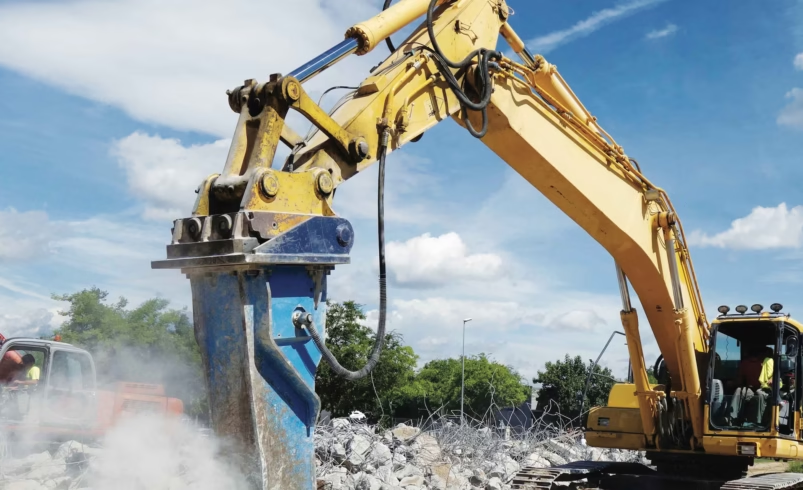
Standard excavators become demolition tools when fitted with the right attachments. Hydraulic breakers handle reinforced concrete and rock. Demolition shears cut through structural steel. Pulverizers and crushers process concrete into manageable rubble. The machine itself is a platform; the attachment defines the application. Contractors should understand which attachments their rental supplier provides and whether those attachments are compatible with the base machine they’re receiving. Mismatched hydraulic flow rates between an excavator and an attachment are a common source of poor performance that gets misdiagnosed as equipment failure.
Skid Steers and Compact Track Loaders
On tighter sites — interior work, residential teardowns, or jobs with limited staging areas — compact machines carry a disproportionate share of the work. Skid steers and compact track loaders are versatile, but they are also among the most commonly over-relied upon machines in demolition. They work well for debris loading and material handling after the primary demolition is complete. They are not substitutes for high-reach or high-force machines when structural elements need to come down. Contractors who understand this distinction avoid costly delays from using the wrong tool for a phase of work.
Telehandlers and Material Handlers
Vertical reach and material placement are often secondary considerations in demolition planning, but on multi-story or partially standing structures, the ability to move heavy debris upward or laterally makes a significant operational difference. Telehandlers provide that reach. Material handlers are designed for sorting and processing mixed debris streams, which matters more as jobsite waste management requirements become stricter in many US jurisdictions.
Matching Equipment Selection to Site Conditions
Site conditions in demolition work are rarely ideal. Contractors who rent equipment without accounting for the ground, access, overhead clearance, and structural complexity of their specific site take on avoidable operational risk. Equipment that performs correctly in one environment can underperform or create hazards in another. This is not a minor concern — it is one of the more common reasons demolition projects fall behind schedule or encounter safety incidents that were preventable.
Ground Bearing Capacity and Stability
Heavy demolition equipment exerts significant downward force. On sites where the subsurface is compromised — due to previous excavation, utility trenches, or soil saturation — the risk of equipment instability increases. Before selecting machine weight class, contractors should have a basic understanding of what the ground can support. This is particularly relevant in urban environments where underground infrastructure may not be fully documented. Ground matting, equipment repositioning plans, and weight distribution are all part of a responsible site setup process.
Access and Clearance Constraints
Not every piece of demolition rental equipment can reach a given worksite without modification to the approach. Machine width, transport height, and turning radius determine whether equipment can be delivered and positioned efficiently. On urban jobsites, clearance restrictions — from power lines, adjacent buildings, or active traffic corridors — can eliminate certain machine categories entirely. Contractors who confirm these constraints before finalizing a rental order avoid the logistical disruption of receiving a machine that cannot be properly positioned.
Structural Complexity and Demolition Method
Not all demolition is mechanical breakdown. Some structures require selective demolition, where certain elements must be preserved while others are removed. Others involve hazardous materials that dictate sequencing and PPE requirements before any machine engages the structure. The demolition method — mechanical, selective, or deconstruction-focused — should drive equipment selection, not the other way around. Contractors who start with the method and work backward to equipment choice tend to build more realistic rental durations and fewer unplanned day-rate extensions.
Understanding Rental Terms and Responsibilities
Rental agreements for demolition equipment are more detailed than standard tool rental contracts. The machines involved are high-value, the potential for misuse is significant, and the liability implications of equipment failure or misuse on an active jobsite are serious. Contractors who sign rental agreements without reading the terms carefully often discover mid-project that they are responsible for costs or conditions they did not anticipate.
Maintenance Obligations During the Rental Period
Most rental suppliers maintain ownership of the equipment and are responsible for major mechanical repairs. However, daily maintenance obligations — fluid checks, filter inspections, track tension, and attachment security — typically fall to the renter during the rental period. When these obligations are not met and a breakdown occurs, the question of who bears the cost depends on what the contract specifies. Contractors should assign a crew member to daily equipment checks and document them, both for operational reliability and for contractual protection.
Rental Duration and Extension Planning
Demolition timelines shift. Weather, subcontractor coordination, permit delays, and structural surprises all affect how long equipment stays on-site. Rental agreements structured around fixed terms without extension flexibility can create situations where a contractor is paying for equipment they cannot yet return, or worse, where they have returned equipment and then need it back at a higher day rate. Building modest schedule buffers into the rental term — and understanding the supplier’s process for extensions — reduces these disruptions before they occur.
Insurance, Damage Waivers, and Liability
Rental suppliers typically offer damage waivers as part of the agreement. These waivers cover accidental damage up to defined limits but rarely cover misuse, improper operation, or damage caused by site conditions that the renter failed to account for. Contractors should confirm that their general liability policy addresses rented equipment and understand exactly what the rental company’s waiver does and does not cover. This conversation should happen before the equipment arrives on-site, not after an incident.
Safety Compliance and Operator Qualification
Demolition is among the higher-risk categories of construction work in the United States, and equipment operation is a significant portion of that risk profile. The Occupational Safety and Health Administration outlines specific regulatory requirements for demolition operations, including engineering surveys, hazardous material identification, and equipment safety protocols. These requirements are not optional, and rental equipment does not exempt a contractor from any of them.
Operator Competency and Machine-Specific Training
Not every experienced equipment operator is qualified to run every type of demolition machine. Hydraulic attachments, high-reach excavators, and material handlers each have operational characteristics that require specific familiarity. Placing an operator on a machine they have not worked with before — even if they hold general certifications — creates risk for the crew and the surrounding site. Contractors should verify operator experience against the specific machines being rented and arrange familiarization time before full production operation begins.
Pre-Demolition Engineering Survey Requirements
Before mechanical demolition begins on any structure, a competent person must conduct an engineering survey of the structure to assess its condition, identify load-bearing elements, and flag any risk of unplanned collapse. This is a regulatory requirement in most US jurisdictions and a practical one regardless of regulation. The findings of that survey should directly inform which machines are used and in what sequence. Rental equipment operates within the constraints that survey defines — it does not replace or supersede the survey process.
Coordinating Equipment Logistics Across a Job
On larger demolition projects, multiple pieces of equipment may be on-site simultaneously, and the coordination of their movement, staging, and use affects crew productivity as much as the machines themselves. Equipment congestion, unclear traffic patterns within the site, and poor debris staging can slow a well-equipped crew to a fraction of their productive capacity.
Effective site logistics planning maps where each machine will operate during each phase, how debris will flow from the point of generation to the point of removal, and which machine needs to move before another can operate. This planning is most useful when it is done before the rental order is placed, because it often reveals that a different mix of equipment — or a different rental sequence — would serve the project better than the initial assumption.
Closing Thoughts
Renting demolition equipment is a practical, well-established approach for US contractors who need access to specialized machinery without permanent capital investment. But the rental model only delivers its full value when the contractor approaches it with the same level of preparation applied to the demolition work itself.
Equipment selection, site condition assessment, rental term management, operator qualification, and safety compliance are not separate concerns. They are connected parts of a single operational system. A gap in any one of them creates friction that ripples through the rest of the project. Contractors who take the time to work through each of these areas before equipment arrives on-site reduce their exposure to delays, cost overruns, and safety incidents that are largely preventable.
The rental market for demolition equipment in the United States is mature and well-supplied. The tools are available. The difference between a well-managed rental and a problematic one is almost always found in the planning that happened — or did not happen — before the first machine was ordered.