
The Essential Pre-Road Trip Checklist for Long-Distance Drivers

The majority of long-distance breakdowns are not the result of something surprisingly going wrong; they are the result of something already being wrong and no one having checked. A couple of hours of pre-trip car maintenance finds the issues your vehicle has been keeping from you while you’re just 200 miles from anything helpful.
Fluids, Belts, And The Cooling System
Let’s start by checking under the hood. Of course, you want to confirm you have enough engine oil, but also take the time to check your brake fluid, coolant, and windshield washing fluid. Insufficient brake fluid could be an indication that your brake pads are wearing down and you’ll appreciate having enough of that fluid in the mountains. Bad coolant isn’t great at keeping your engine at the right operating temperature, and losing a bunch of brake fluid in the middle of nowhere isn’t ideal either.
Specifically, squeeze and feel your cooling system hoses. A good hose should feel firm yet pliable. A hose that feels soft, spongy, or brittle near the clamps is a hose that could split and leave you stranded in the desert or the mountains. Check the level of coolant in your radiator, not just the overflow bottle, and carry extra coolant if you think you might be needing to tip the mixture for a hotter or colder climate.
When To Hand It Over To A Professional
Inspecting your car for problems before a road trip is a smart thing to do. Some parts of the vehicle can’t be properly inspected without specific tools and knowledge of car maintenance. Brake systems, car suspensions, and wheel alignments can’t be visually inspected. If something feels off with your brakes, better be safe than sorry and book a professional auto service before your long journey. A car pre-trip check-up is fairly inexpensive when you consider the cost of a roadside repair in an unknown city.
But it’s not just your own faculties that need attending to. This is also the time to consult your vehicle’s owner manual and check the maintenance guidelines and intervals set by the manufacturer. If your car is nearing some scheduled service, i.e. an oil change, brake check, or air filter replacement, it’s worth having that done as well. A dirty air filter is a cheap replacement and something you’ll be grateful you swapped when your engine is more responsive during a long drive.
Tires Need More Than A Kick
Checking your tire pressure helps prevent blowouts due to incorrect PSI. However, tire pressure is not the only thing you should check to prevent accidents on the highway.
Inspect each of your tires by running your hand along them and examining their sidewalls for bubbles or bulges. If you find a bubble in the sidewall, the integrity of the tire has been compromised and it needs to be replaced immediately, as highway speeds can cause a defective tire to fail catastrophically. This is not a “keep going until you can afford to replace it” situation.
Look at the tread not only in the center but also out toward the edges because tire wear may not be even. If you’re burning through rubber faster on one side, it’s likely you need an alignment. An alignment issue will make a long highway drive excruciating, wear you out as you struggle to keep your wheels straight, and wear out your good tires even faster.
Lastly, pull out your spare tire and your jack. Make sure your jack is in good working order, that you have all the pieces, and that your spare has the proper amount of air in it. It’s a particularly bad time to realize that your spare is empty when you’re already stranded on some lonesome stretch of road.
Battery And Lighting Checks
Vehicle breakdowns can be caused by battery issues which is a major reason people call for roadside assistance. If you have an older battery, it may not be long for this world. Before you hit the road, if your car battery is more than three years old, have it tested. Both cold weather and extreme heat can wear a battery down, and taking a long trip in spring will probably expose it to both. Next, pop the hood and have a look at the battery cables. If you see a white or greenish powder accumulating, disconnect the cables and clean the terminals with a wire brush. You don’t want a weak battery to strand you in the middle of nowhere simply because it was dealing with your daily commutes’ drainage.
Pack The Basics, But Fix The Gaps First
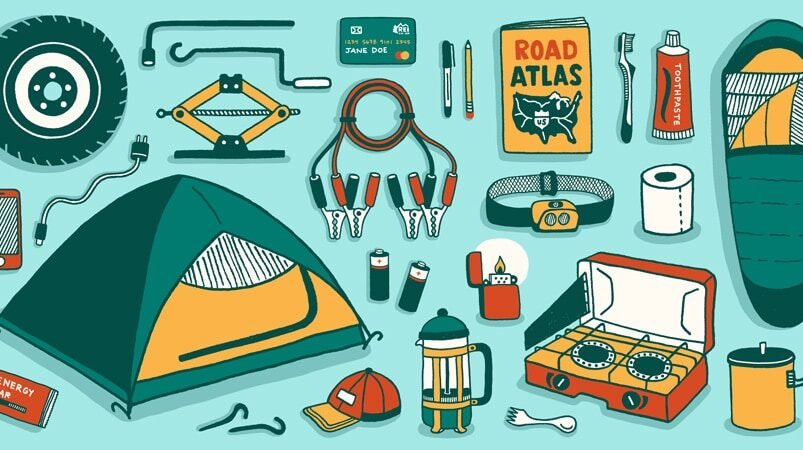
Having an emergency kit with jumper cables, a torch, basic tools, and water is important. But the best safety precaution is a car you don’t have to rescue. Pre-trip car maintenance doesn’t mean you’re being paranoid, it just means you won’t spend your entire journey worrying about that clanking noise. If you already noticed some things that need to be fixed, take care of them before you go on your trip. Voila, driving just got a lot better.