
The Insight Platform Buyer’s Guide for US SaaS Companies: What to Evaluate Before You Sign

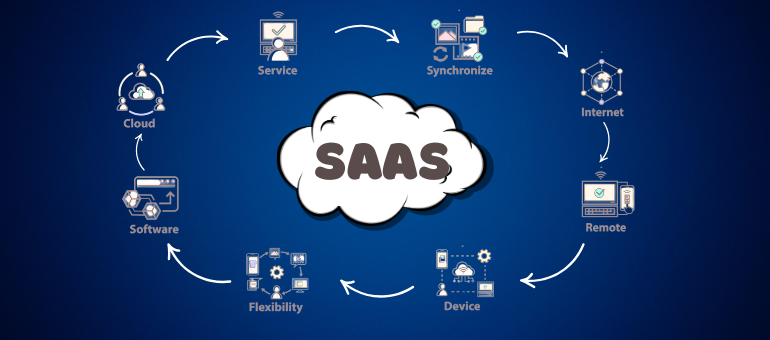
Product teams at US SaaS companies are under consistent pressure to make faster decisions with less ambiguity. Feature prioritization, roadmap sequencing, customer retention signals, and competitive positioning all require timely, structured data to support good judgment. The problem is that most organizations already have access to data — they simply lack a reliable system for turning that data into something decision-makers can actually use.
This is the context in which insight platforms have become a serious operational consideration. The category has matured quickly, and the market now includes platforms that vary widely in architecture, capability, and organizational fit. Choosing the wrong one doesn’t just waste budget — it creates friction in product workflows, erodes trust in data, and slows down the kind of cross-functional alignment that growing SaaS companies depend on.
This guide is written for product leaders, operations managers, and technology decision-makers who are evaluating insight platforms and need a clear framework for what to assess before making a commitment.
What an Insight Platform Actually Does in a SaaS Environment
An insight platform is a system designed to collect, organize, and surface structured intelligence from multiple data sources — user feedback, usage patterns, market signals, and team inputs — so that product and strategy teams can make decisions grounded in evidence rather than assumption. In a SaaS context, this means connecting signals that are often scattered across customer success tools, analytics dashboards, CRM records, and qualitative research into a single, coherent view.
The distinction between an insight platform and a generic analytics tool matters here. Analytics tools report what happened. Insight platforms are built to explain why it happened, identify patterns across data types, and support the kind of ongoing decision-making that product teams face every sprint cycle.
The Operational Gap These Platforms Address
Most product teams operate with informal insight systems — a mix of spreadsheets, shared documents, Slack threads, and individual memory. This works when the organization is small, but it breaks down as the team grows, as customer segments diversify, and as the product itself becomes more complex. Decisions made in this environment tend to reflect whoever spoke loudest in the last meeting, rather than the strongest available evidence.
An insight platform addresses this gap by creating a consistent, repeatable process for capturing and applying what the organization knows. When a customer success manager logs a recurring complaint, when a user researcher completes an interview series, or when usage data reveals unexpected drop-off at a key feature — all of that needs to land somewhere accessible, structured, and connected to ongoing product decisions. Without a dedicated system, it rarely does.
Evaluating Data Integration and Source Coverage
The practical value of any insight platform depends heavily on its ability to connect with the data sources your organization already uses. A platform that requires manual data entry or that only integrates with a narrow set of tools will create more work than it eliminates. Before signing any contract, your team should map every active data source — customer support tickets, NPS surveys, product analytics, sales call recordings, user interviews — and verify that the platform can ingest from each without requiring significant custom engineering.
Integration Depth vs. Surface-Level Connectivity
There is a meaningful difference between a platform that offers an API connection and one that has a deep, maintained integration with the tools your team depends on. Surface-level integrations often require manual configuration, break when third-party tools update, or only pull partial data sets. Deep integrations are maintained by the platform vendor, handle schema changes automatically, and pull complete, structured records.
Ask vendors directly: which integrations are native versus third-party connectors? How often are those connectors updated? What happens when a source tool changes its data structure? The answers will reveal how much internal maintenance your team will need to absorb over time.
Handling Unstructured Data Sources
A significant portion of product insight lives in unstructured formats — interview transcripts, open-ended survey responses, support tickets written in natural language, or notes from customer calls. Platforms differ considerably in how they handle this type of input. Some offer tagging and manual categorization. Others apply automated classification. The right approach depends on your team’s research volume and the accuracy standards your process requires.
For teams running frequent qualitative research cycles, automated processing that introduces consistent categorization errors will undermine trust in the system over time. Evaluate any automated classification against your actual data — not vendor-provided sample data — before accepting claims about accuracy.
Assessing Workflow Fit for Product Teams
A platform that your team doesn’t use consistently produces no value, regardless of how capable it is. Workflow fit is not a secondary concern — it is one of the most reliable predictors of whether an insight platform will deliver on its stated purpose. This means evaluating how the platform integrates into existing team rituals, how it handles different user roles, and how much friction it introduces for the people most responsible for capturing and applying insights.
Role-Based Access and Contribution Models
Product teams include people with different relationships to data — researchers who generate primary insights, product managers who apply those insights to roadmap decisions, executives who need high-level summaries, and engineers who occasionally need to understand user intent behind specific features. A well-structured platform accommodates all of these roles without forcing every user into the same interface.
Platforms that require all users to operate within a single, complex interface often see low adoption from peripheral contributors — the sales lead who occasionally adds customer feedback, or the support manager who logs emerging complaint themes. Contribution needs to be low-friction for the system to work.
Connecting Insights to Decision Records
One of the more undervalued features in this category is the ability to connect a captured insight to a specific decision, feature, or roadmap item. This creates traceability — the ability to answer, months later, why a particular decision was made and what evidence supported it. Organizations that build this habit develop stronger institutional memory, better cross-team alignment, and a clearer audit trail for product strategy.
Not every platform in this category supports this kind of decision linkage. It is worth asking vendors how teams document the relationship between evidence and action within their system, and reviewing how that looks in practice.
Understanding Vendor Stability and Support Quality
In the SaaS procurement context, vendor stability is often underweighted in evaluation frameworks. Buyers focus heavily on feature sets during the sales process and pay less attention to questions of organizational health, support responsiveness, and product roadmap reliability. These factors matter more than they appear to at signing.
Evaluating the Vendor’s Product Development Trajectory
An insight platform is not a one-time purchase — it is an ongoing relationship with a vendor whose development decisions will affect your workflows for years. A vendor that releases frequent, well-documented updates is typically investing in the product. A vendor with long gaps between meaningful updates, or whose changelog is dominated by minor fixes, may be in a maintenance posture rather than an active development one.
Request a product roadmap conversation — not a marketing overview, but a direct discussion with a product contact about what is being built, what tradeoffs are being made, and what customer feedback is driving upcoming releases. The quality of that conversation tells you a great deal about how seriously the vendor takes customer success as a discipline, which is distinct from customer success as a sales function. The SaaS procurement model places ongoing vendor relationship quality at the center of long-term value delivery.
Support Structure and Escalation Paths
Evaluate what happens when something breaks. Many platforms offer tiered support, where the response time and depth of assistance depends on contract size. Before signing, understand exactly what tier your organization would fall into, what the committed response times are for different issue types, and whether there is a defined escalation path for critical failures.
For product teams, a failure in the insight platform — missing integrations, corrupted data, inaccessible records — can directly delay roadmap decisions or research synthesis. The cost of downtime is not just technical; it disrupts planning cycles that have their own downstream dependencies.
Pricing Structure and Total Cost of Ownership
The listed price of an insight platform rarely represents the total cost of operating it. Implementation work, training time, integration maintenance, and the internal resources required to administer the system all contribute to the real cost. Some platforms also have pricing models that scale aggressively with user count or data volume, which creates budget exposure as the team grows.
Request a detailed breakdown of all cost components — not just the license fee. Ask specifically about what happens to pricing when your team doubles, when you add a new data source, or when you need to export historical data. Platforms with transparent, predictable pricing structures are significantly easier to budget around and introduce fewer mid-contract surprises.
Security, Compliance, and Data Residency
SaaS companies operating in the US frequently handle sensitive customer data — behavioral data, feedback content, and in some cases personally identifiable information tied to specific accounts. Any insight platform that ingests customer-related data must meet the security and compliance standards your organization has committed to, both for regulatory reasons and for customer trust.
Review the vendor’s SOC 2 Type II certification status, data residency options, and how they handle data deletion requests. If your company serves customers in regulated industries — healthcare, finance, education — verify that the platform’s compliance posture extends to those domains. A vendor that cannot clearly answer data governance questions is one that has not made compliance a product priority, which is a meaningful risk signal.
Concluding Assessment
Selecting an insight platform is not primarily a technology decision — it is a decision about how your organization will structure its relationship with evidence and how consistently that evidence will inform the work of product, strategy, and operations teams.
The evaluation criteria in this guide — integration depth, workflow fit, vendor stability, pricing transparency, and compliance posture — are all downstream of a more fundamental question: does this platform support the kind of disciplined, evidence-based decision-making your team is trying to build?
The strongest candidates in this category will offer clear answers to direct questions, provide reference customers who match your organizational profile, and demonstrate a product development approach that reflects genuine investment rather than market positioning. Platforms that perform well under scrutiny during the evaluation process tend to perform well in operation. Those that resist specificity or deflect technical questions during sales rarely improve after signing.
Take the evaluation seriously, involve the team members who will use the system daily, and treat the contract conversation as the beginning of an ongoing operational relationship — not the conclusion of a procurement process.