The Complete Wire Mesh Tube Guide: Specs, Materials, and Sourcing for US Manufacturers

Procurement decisions in manufacturing rarely receive the attention they deserve until something goes wrong. A component that underperforms under pressure, corrodes ahead of schedule, or arrives inconsistently sized can disrupt production timelines and push quality control teams into reactive mode. Wire mesh tubes are one of those components that often sit quietly in the background of an operation — filtering, supporting, shielding, or containing — until the wrong spec or the wrong supplier makes them very visible.
For engineers and procurement managers working across industrial filtration, chemical processing, food production, HVAC, and other sectors, understanding the full scope of what wire mesh tubes involve — from material selection to fabrication standards to sourcing considerations — is a practical necessity. This article addresses those considerations in plain terms, without oversimplifying the complexity that real applications demand.
What Wire Mesh Tubes Are and Why Specification Matters
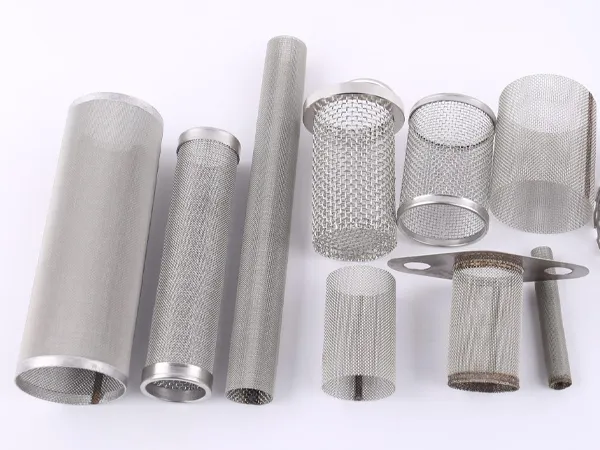
A wire mesh tube is a cylindrical form constructed from woven or welded wire fabric, typically produced from metal alloys and used in applications that require controlled permeability, structural integrity under pressure, or resistance to heat and chemical exposure. The cylindrical format allows for consistent flow distribution in filtration contexts, uniform surface contact in separation processes, and structural stability in applications where flat mesh would fail to hold its shape.
Specification is where most sourcing problems begin. Because wire mesh tubes appear deceptively simple, purchasing teams sometimes treat them as commodity items — interchangeable across suppliers and applications. They are not. The combination of wire diameter, mesh count, weave pattern, and alloy composition determines how a tube performs under real operating conditions. A tube that looks identical to another may behave entirely differently when exposed to high-pressure fluid flow, elevated temperatures, or corrosive media. For a thorough breakdown of how these variables interact across different configurations, the Wire Mesh Tube guide from Gemini Wire Mesh offers structured technical context that engineers and buyers will find genuinely useful when evaluating options.
The Role of Weave Pattern in Performance
The weave pattern of a wire mesh tube is not an aesthetic choice — it directly determines the mechanical properties of the finished component. Plain weave, twill weave, and Dutch weave each produce different pore geometries, different pressure drop characteristics, and different load-bearing behaviors. Plain weave offers uniform opening size and is easier to clean, making it a practical choice for coarser filtration. Twill weave creates a more flexible structure that can accommodate tighter wire diameters while maintaining weave integrity. Dutch weave, with its distinct warp and weft wire sizing, produces a finer filtration surface suited for applications where fine particle retention is critical.
When engineers select a weave pattern without considering downstream flow dynamics, they risk either over-filtering — which increases pressure drop and restricts flow — or under-filtering, which allows particulates to pass that damage downstream equipment. Both outcomes create operational problems that are expensive to correct once a system is installed.
Why Mesh Count Alone Is Not a Complete Specification
Mesh count refers to the number of openings per linear inch in a woven structure. It is a starting point, not a complete specification. Two tubes with identical mesh counts can have very different opening sizes depending on the wire diameter used in their construction. A coarser wire with a high mesh count produces smaller openings than a finer wire at the same count. This distinction matters significantly in filtration applications where opening size directly determines what passes through and what is retained.
Procurement documents that specify mesh count without wire diameter leave room for suppliers to fulfill orders that technically meet the stated requirement while producing a component that does not perform as intended. Specifying both mesh count and wire diameter — along with the weave pattern and alloy — closes that gap and gives manufacturers a genuine basis for comparing quotes across suppliers.
Material Selection for Industrial and Chemical Environments
The material composition of a wire mesh tube determines its service life in any given environment. Stainless steel alloys are the most commonly specified material across industrial applications because they offer a reliable balance of corrosion resistance, strength, and weldability. However, stainless steel is not a single material — it is a family of alloys with meaningfully different properties depending on their chromium, nickel, and molybdenum content.
Grade selection should follow from a clear understanding of the operating environment. Chloride exposure, elevated temperatures, acidic or alkaline media, and oxidizing conditions each place different demands on the alloy. Selecting a material based on cost alone, or defaulting to the most common grade without evaluating the environment, increases the likelihood of premature failure — which is always more expensive than the initial cost difference between grades.
Common Alloy Grades and Their Operating Contexts
Among stainless steel options, the austenitic grades — particularly those in the 300 series — are widely used in filtration and process applications because of their non-magnetic properties, their corrosion resistance in moderate environments, and their compatibility with welding and forming operations. Higher-alloyed grades, including those with elevated molybdenum content, are specified when chloride resistance or resistance to pitting corrosion becomes a priority — as it is in marine, chemical processing, and food-grade applications where cleaning cycles involve chlorine-based agents.
In high-temperature applications, ferritic or specialized heat-resistant alloys may be appropriate. These offer improved performance under thermal cycling conditions where austenitic grades may be prone to sensitization — a structural change that reduces corrosion resistance — when repeatedly exposed to elevated temperatures over time. Understanding these material behaviors before specifying a tube is not over-engineering; it is appropriate diligence for any application where component replacement is costly or disruptive.
Non-Metallic and Alternative Material Considerations
While metallic mesh tubes dominate industrial applications, there are contexts where alternative materials are appropriate or even necessary. Certain chemical processing environments involve media that would rapidly degrade any metal alloy. In these cases, polymer-based mesh structures or specialty coated options may provide a workable solution, though often at the cost of structural rigidity and temperature tolerance.
The decision to move away from metal is not one to make lightly. Non-metallic mesh tubes typically carry lower pressure ratings and narrower temperature ranges. Any application involving mechanical stress, elevated pressure, or thermal cycling should be evaluated against the manufacturer’s tested performance data for the specific material in question — not general assumptions about material categories.
Fabrication Standards and Dimensional Consistency
Wire mesh tubes are produced through several fabrication processes, including rolling flat mesh into cylindrical form and welding or crimping the seam, as well as braiding processes that create seamless tubular structures. The fabrication method affects the mechanical consistency of the tube, particularly along the seam, and should be evaluated against the mechanical demands of the application.
Seamless or braided constructions offer more uniform structural integrity across the entire surface, which is advantageous in applications where internal pressure is applied evenly across the tube wall. Seam-welded constructions are more common and generally adequate for most filtration and separation applications, provided the weld quality is consistent and the seam is properly finished to avoid creating a weak point under load.
Dimensional Tolerances and What They Mean in Practice
Dimensional consistency matters more in wire mesh tube procurement than buyers sometimes anticipate. When a tube must fit precisely within a housing, flange, or casing — as is typical in filter cartridge assemblies or in-line process equipment — even minor variation in outer diameter or length can create assembly problems, bypass gaps, or seal failures. These issues often do not surface during initial installation; they appear under operating conditions when vibration, thermal expansion, or pressure fluctuation exposes dimensional inconsistency.
Specifying acceptable dimensional tolerances in procurement documentation — rather than accepting whatever a supplier’s standard practice produces — gives manufacturers meaningful control over fit and function. This is particularly important when sourcing from international suppliers where communication gaps around technical requirements can result in product that meets the drawings but not the operational intent behind them.
Sourcing Considerations for US Manufacturers
The sourcing environment for wire mesh tubes in the United States involves both domestic fabricators and international suppliers, each with different implications for lead time, quality consistency, and supply chain risk. According to the ASTM International standards framework, many industrial wire mesh products are governed by established specifications that define acceptable wire characteristics, weave tolerances, and testing methods — and not all suppliers, particularly those operating outside established standards bodies, adhere to these benchmarks without explicit contractual requirement.
Domestic fabricators generally offer shorter lead times and easier access to technical support during the specification process. They also tend to be more responsive when dimensional or quality issues arise, because the logistical and communication barriers are lower. The trade-off is typically price, particularly for standard configurations that international suppliers have optimized for volume production.
Evaluating Supplier Capability Before Committing
Supplier evaluation for wire mesh tubes should go beyond price comparison. The key questions involve whether a supplier can produce to a specified standard, what quality control processes they have in place, how they handle out-of-tolerance product, and whether they maintain documentation that supports incoming inspection at the receiving end. For manufacturers operating under quality management systems or industry-specific compliance requirements, this documentation is not optional — it is part of demonstrating that incoming components meet the standard the finished product requires.
Sample orders and first-article inspections before committing to volume purchasing are a practical risk mitigation step, particularly when working with a new supplier or evaluating a new configuration. The cost of a sample run is small relative to the cost of receiving a large order of non-conforming product that cannot be used.
Closing Considerations for Procurement and Engineering Teams
Wire mesh tubes occupy a specific and often underappreciated position in industrial supply chains. They are not high-profile components, but their performance has a direct bearing on system reliability, product quality, and operational continuity. The decisions made at the specification stage — around weave pattern, material grade, fabrication method, and dimensional tolerances — determine how well those tubes perform over their service life and how much attention they require once installed.
For procurement and engineering teams working through these decisions, the most useful approach is to treat specification as a collaborative process between the engineering function that understands the operating environment and the procurement function that manages supplier relationships. Each brings information the other needs to make a well-grounded choice. When that collaboration is absent, specifications tend to be either under-defined — leaving too much to supplier discretion — or over-defined in ways that unnecessarily limit sourcing options without improving performance.
Getting the specification right, working with suppliers who can demonstrate consistent quality, and maintaining clear documentation through the procurement process are the practical foundations of reliable sourcing for wire mesh tubes in any industrial context. There is no shortcut to that outcome, but the process is straightforward when approached with appropriate rigor from the beginning.