The Complete OligoScan Guide: How Americans Are Using Spectrophotometry to Optimize Their Health in 2025

Over the past several years, a growing number of Americans have moved away from reactive approaches to health management and toward methods that offer a clearer picture of what is happening inside the body before symptoms become serious. This shift is not driven by wellness trends or marketing campaigns. It is driven by a practical frustration: standard blood panels often miss early imbalances in trace minerals and heavy metals, leaving both patients and practitioners working with incomplete information.
Spectrophotometry-based mineral analysis has emerged as one of the more reliable tools to fill that gap. The technology is not new, but its application in clinical and functional health settings has grown considerably as practitioners look for ways to make nutritional and detoxification protocols more precise. Understanding what this type of testing actually measures, how it works, and when it makes sense to use it is increasingly relevant for anyone managing long-term health outcomes — whether as a patient, a clinician, or a health-focused professional.
What OligoScan Testing Actually Measures
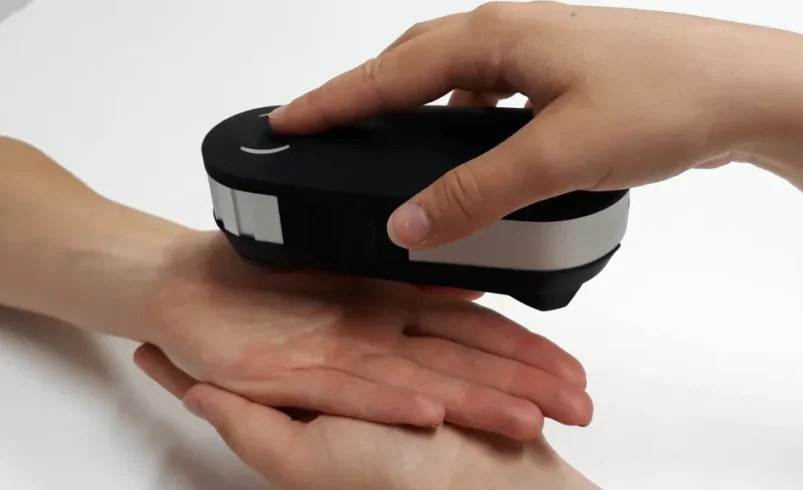
OligoScan is a non-invasive diagnostic tool that uses spectrophotometry to analyze the concentration of minerals, trace elements, and heavy metals in the body’s tissues. Rather than drawing blood or collecting urine, the device reads optical light absorption through the palm of the hand, generating a report that reflects the mineral status of the body’s cellular environment. For anyone looking to understand the practical scope of what this assessment covers, a structured Oligoscan guide will explain how the technology translates light absorption data into actionable clinical information.
The distinction between tissue-level measurement and blood-level measurement matters more than most people realize. Blood values represent what is circulating at a given moment, which is influenced by recent food intake, hydration, and other transient factors. Tissue measurements, by contrast, reflect a more stable picture of what the body has actually absorbed and stored over time. This is particularly relevant for minerals like magnesium, which may appear normal in bloodwork even when cellular stores are genuinely depleted.
The Role of Trace Minerals in Cellular Function
Trace minerals are not optional components of human physiology. They function as cofactors for enzymatic reactions, support neurological signaling, regulate hormonal activity, and maintain structural integrity in bones and connective tissue. When these minerals are out of balance — whether deficient, excessive, or displaced by heavy metal accumulation — the effects are felt across multiple systems simultaneously. The challenge has always been detection: because the symptoms of mineral imbalance overlap with dozens of other conditions, identifying the root cause without direct measurement is difficult.
Spectrophotometric tissue testing offers a way to quantify these imbalances with a level of specificity that general intake assessments cannot match. It accounts for the fact that two people eating identical diets can have very different mineral status depending on their absorption capacity, stress burden, toxic exposure history, and metabolic rate. This variability is precisely why population-level dietary guidelines can only go so far in addressing individual deficiencies.
Heavy Metal Accumulation and Its Clinical Significance
Heavy metal exposure is more widespread than most people assume. Lead, mercury, cadmium, arsenic, and aluminum enter the body through food, water, air, dental materials, and occupational contact. At low levels of accumulation, these metals rarely trigger acute symptoms, but they do interfere with mineral metabolism by competing with essential elements for absorption and binding sites. Mercury, for example, is known to displace selenium and zinc, two minerals critical for immune regulation and antioxidant defense.
Standard clinical testing rarely screens for heavy metals unless there is a known acute exposure. This creates a gap for individuals who have had long-term low-level exposure — a category that includes far more people than is commonly acknowledged. Tissue-based analysis can identify accumulation patterns that would otherwise go undetected, allowing practitioners to make more informed decisions about targeted detoxification support before the burden reaches a threshold that affects measurable organ function.
How the Testing Process Works in a Clinical Setting
The OligoScan procedure itself is straightforward. A handheld device is applied to four points on the palm, and the readings are completed within minutes. No needles, no laboratory wait times, and no complex preparation protocols are required. The device transmits data to a connected platform that generates a detailed report showing mineral ratios, heavy metal load estimates, and oxidative stress indicators. The entire process typically fits within a standard appointment window, making it practical to integrate into functional medicine consultations, naturopathic assessments, or health optimization programs.
Interpreting Results in the Context of Individual Health History
The report generated by an oligoscan assessment is not meant to be read in isolation. Like any diagnostic output, the values it produces gain meaning when placed alongside a patient’s symptoms, history, lifestyle factors, and other test results. A practitioner reviewing the results will look at not just individual mineral levels but also the relationships between them — because minerals operate within a system, and the ratio of one to another can be more informative than any single value.
For instance, the relationship between copper and zinc is well-documented in functional medicine. An elevated copper-to-zinc ratio has been associated with anxiety, immune dysregulation, and hormonal imbalances. Without a direct tissue measurement, this imbalance can persist for years without being identified. When the ratio is flagged clearly in a report, a practitioner has a specific, addressable starting point for intervention rather than a broad cluster of symptoms to interpret.
Frequency of Testing and Monitoring Over Time
One of the practical advantages of this type of testing is its suitability for longitudinal monitoring. Because the procedure is non-invasive and quick, it can be repeated at regular intervals to track how mineral status responds to dietary changes, supplementation protocols, or detoxification support. This is particularly relevant for patients undergoing active treatment, where understanding the rate of change over time helps practitioners adjust protocols rather than waiting for symptoms to indicate whether an intervention is working.
For individuals managing chronic fatigue, hormonal conditions, autoimmune presentations, or environmental illness, this capacity for repeatable monitoring adds a layer of precision that is difficult to achieve through symptom tracking alone. The objective data provides a common reference point between practitioner and patient, which often improves compliance and communication throughout a treatment program.
Who Is Using OligoScan Testing in the United States
The adoption of spectrophotometric tissue analysis in the United States has been primarily practitioner-driven. Functional medicine physicians, naturopathic doctors, integrative health practitioners, and licensed nutritionists have incorporated it into their assessment tools as demand for more comprehensive baseline testing has grown. The technology is recognized within the broader framework of functional and integrative medicine, which emphasizes identifying root causes rather than managing symptoms through pharmaceutical intervention alone.
Patients seeking this type of assessment tend to fall into identifiable groups. Some are managing diagnosed conditions that have not responded fully to conventional treatment. Others are high-performing individuals — athletes, executives, or those under sustained occupational stress — who want to understand their physiological baseline in detail. A third group includes people with significant environmental exposure histories, whether through geography, occupation, or lifestyle, who want to assess the cumulative impact on their mineral and toxin load. According to the National Institutes of Health, trace mineral deficiencies are associated with a wide range of chronic health conditions, yet they remain underdiagnosed in standard clinical care.
Integration with Broader Health Protocols
Oligoscan results are most useful when connected to a broader framework of care. Practitioners who use the technology tend to combine findings with comprehensive blood chemistry, hormone panels, gut microbiome assessments, and detailed intake evaluations. The mineral data informs which supplements are indicated, what dietary adjustments are likely to be most impactful, and whether detoxification support should be prioritized before nutrient repletion begins.
This sequencing matters. Attempting to correct mineral deficiencies without first addressing heavy metal interference can produce limited results, because displaced minerals cannot be effectively absorbed while competing metals remain present in significant quantities. The testing provides clarity on this question that guesswork or generalized protocols cannot reliably replicate.
Limitations and Practical Considerations
No single diagnostic tool is comprehensive, and it is worth being clear about what oligoscan testing does not do. It is not a replacement for full blood chemistry, nor does it provide genetic information or diagnose disease. The accuracy of results can be influenced by hydration status, skin conditions at the test site, and certain medications. Results should always be reviewed by a trained practitioner who understands how to contextualize the data rather than treating the numerical outputs as standalone diagnoses.
Cost and insurance coverage are also practical considerations. The procedure is not covered by most conventional insurance plans, placing it in the category of out-of-pocket health investments. For individuals who are already engaged with functional or integrative healthcare, this is often an expected part of their approach. For those new to this model of care, understanding what the assessment can and cannot offer is important before committing to it as part of a health plan.
Conclusion
The growing interest in spectrophotometric tissue analysis reflects a broader shift in how Americans are approaching health management. The preference for objective, individualized data over generalized recommendations is reshaping the relationship between patients and practitioners — and creating demand for tools that can deliver that specificity without invasive procedures or long turnaround times.
OligoScan occupies a specific and useful space in this context. It does not replace comprehensive clinical evaluation, but it adds a dimension of information that standard assessments typically miss. For practitioners looking to improve the precision of nutritional and detoxification protocols, and for patients who want a clearer understanding of their mineral and toxic burden, it represents a practical and increasingly accessible option. As with any diagnostic tool, its value depends entirely on how the results are interpreted and what is done with the information — which makes choosing an experienced and knowledgeable practitioner the most important decision in the process.