Why Your Live Score Never Matches the Broadcast, and What Fast Updates Take

A basket drops at the buzzer, your phone buzzes with the final result, and the stream on your laptop is still showing the inbound pass. Flip it around and you get the opposite problem: the commentator is losing his voice, but the number on your screen hasn’t moved in ten seconds.
Neither one is a glitch. Both come from a chain of small delays that every live score travels through before it reaches you, and the worst of those delays are rarely the ones people blame.
One Basket, Five Handoffs
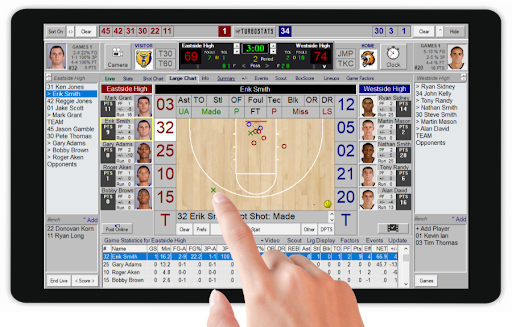
Every live score starts with a person. At the arena, an official scorer or data collector logs each event as it happens, whether that’s a made three, a foul or a turnover. That entry lands in a stat system, which hands it to a data provider.
The provider checks it, formats it, and pushes it out to apps and websites, and then each site decides how to show it. Some ask for fresh data every few seconds on a timer. Others hold a connection open and receive changes the instant they arrive.
That single choice can open a gap of several seconds. Add caching, where a server keeps a saved copy of a page so it loads faster, and the gap stretches again.
The basket was real. The number you’re looking at is a copy of a copy.
And the broadcast runs on an entirely different clock.
Your Stream Has a Clock of Its Own
Cable and satellite usually trail the arena by a few seconds. Streaming piles encoding and buffering on top, and on some services the total can stretch to half a minute or more. Nobody sets that number for you, and it changes from app to app.
So one score looks different depending on where you watch. On cable, an app can seem slow. On a stream, the same app can seem like it’s spoiling the game.
The data never changed. Only your reference point did.
That’s why a basketball live score can feel sluggish to one fan and unbearably early to another sitting in the same room. Two people can argue for ten minutes about whether an app is broken and both be right about what they saw. A friend texting “what a dunk” before you’ve seen the dunk isn’t psychic, just on a faster screen.
Still, some of that lag does belong to the score source, and you can spot it once you know what to look for. It just hides behind the bigger delays.
What Separates a Quick Source From a Slow One
Four things tend to decide it.
- A source that receives updates through an open connection shows changes sooner than one that checks on a timer.
- A page stuffed with ads and heavy scripts can redraw slowly even when the data arrived on time.
- Sources that pull straight from a primary provider skip the resellers in between, and every reseller adds a pause.
- Scorers fix mistakes, like a three that was really a two, and a good source corrects the number quietly without breaking the page.
Load matters as much as design. Many fans type basketball live score today into a search bar a few minutes before tipoff, so traffic arrives in one wave. A page that runs fine on a quiet afternoon can crawl when thousands open it at once.
Anyone who has refreshed a frozen page during a tied fourth quarter knows exactly how that feels.
A Ten-Minute Test You Can Run Tonight
You don’t need special tools to measure a source. Open a game on two different live score pages side by side and keep your stream running next to them. Watch for the next made basket, note which screen shows it first, and count how many seconds the slower one takes.
Do it a few times, in different quarters. One reading can be luck, because a busy stretch of play can slow any page for a few seconds. Three readings start to show a pattern.
Pay attention to what happens when the score changes, too. Does the number update cleanly, or does the whole page reload and throw you back to the top?
Timing is one test. The other is whether the numbers mean anything once they arrive.
A Fast Number With No Context Is Still Just a Number
A score of 54 to 51 tells you very little. It doesn’t say whether the star is in foul trouble, whether the coach has gone small, or whether one team is shooting far below its average and due to recover.
Picture a tied game with four minutes left. One app shows 88-88 and nothing else. Another shows the same score, plus the fact that the home team’s best passer just picked up a fifth foul.
Same number, completely different read on the next four minutes.
Football works the same way. A 1-1 draw in the 80th minute reads differently when one side has taken ten shots and the other hasn’t had one. A page for football scores that puts shots, lineups and standings beside the result does more work than one that prints only the result.
The result is the headline. The stats are the story.
A good live score page behaves more like a small dashboard than a single number. Which raises something many fans rarely check before picking an app: whose games it was actually built to cover.
Local Games Rarely Get Global Attention
Big international apps are tuned for their biggest audiences. For a fan in the Philippines, a UAAP game or a PBA night can matter far more than a midweek NBA fixture. Yet the basketball live score for a local match can sit lower on the page or arrive with thinner stats.
A fan checking a PBA result at lunch wants the final, the top scorer and the standings, not a wall of NBA headlines.
Football has the same gap. Results from smaller competitions can show up late or without lineups, and finding the right match is part of speed too. A quick live score buried four taps deep is still slow.
Kadario is one example of a product built around these problems, covering basketball and football on one platform with fixtures, results, standings, lineups and stats in the same place. Its competition list runs from the PBA to the NBA and EuroLeague, and its stated aim is fast match updates with clear statistics. For anyone checking football scores between meetings, that mix of speed and context is the practical test.
What to Check Before the Next Tipoff
No source can erase delay completely. A person has to log the play, a server has to relay it, and your phone has to draw it. What you control is the comparison.
Next time a number looks late, check which screen you’re measuring it against. Then look at what sits beside it: the lineup, the standings, the stat line. A basketball live score that still makes sense after it changes is worth more than one that is merely first.