
Protein Peptides and Their Role in Healthy Aging and Cellular Regeneration

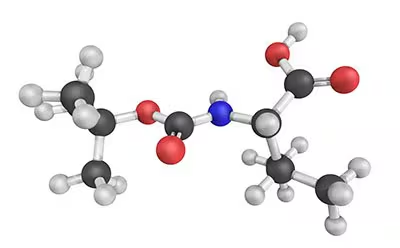
Aging is often framed as a gradual decline, but at the cellular level it is more about changing efficiency in repair, signaling, and regeneration. This is where interest has grown around protein peptides for healthy aging and cellular regeneration, especially in nutrition science and biohacking circles focused on longevity and functional health.
Peptides are short chains of amino acids that act as biological messengers. Instead of directly building tissue like full proteins, they influence how cells communicate, repair damage, and regulate key biological processes tied to aging.
How Peptides Fit Into the Aging Process
As the body ages, several natural changes occur: collagen production slows down, muscle protein synthesis becomes less efficient, and cellular repair mechanisms gradually weaken. These shifts contribute to visible aging in skin, reduced muscle mass, and slower recovery from stress or injury.
Protein peptides are being studied because they may help signal processes involved in tissue repair and maintenance. Rather than replacing what the body loses, they may support the communication pathways that regulate regeneration.
This is why peptides are often discussed in the context of longevity rather than immediate performance.
Peptides and Cellular Communication
One of the most important roles of peptides is cellular signaling. Cells constantly communicate through molecular messages that regulate inflammation, repair, and growth.
Certain bioactive peptides may influence these signaling pathways by interacting with receptors involved in repair and metabolic balance. This has led to interest in their potential role in slowing some aspects of age-related decline.
Research in this area is still developing, but early findings suggest peptides may help modulate biological processes linked to tissue maintenance and recovery.
Collagen Peptides and Structural Aging
Collagen is one of the most abundant proteins in the body and plays a major role in skin elasticity, joint health, and connective tissue strength.
As collagen production declines with age, visible signs such as wrinkles, joint stiffness, and reduced skin firmness become more pronounced.
Collagen peptides are broken-down forms of collagen that are easier for the body to absorb. Some studies suggest supplementation may support skin hydration, elasticity, and connective tissue health over time when combined with proper nutrition and lifestyle habits.
While not a reversal of aging, they are often used as a supportive tool for structural maintenance.
Bioactive Peptides and Longevity Research
Beyond collagen, bioactive peptides are being explored for their broader effects on aging-related biological processes. These peptides may influence oxidative stress, inflammation, and metabolic regulation, all of which are closely tied to cellular aging.
Some research suggests bioactive peptides could support healthier aging by reducing markers of cellular stress and improving functional resilience in tissues.
However, most evidence is still emerging, and results vary depending on peptide type, dosage, and study design.
Cellular Regeneration and Repair Pathways
Cellular regeneration refers to the body’s ability to replace or repair damaged cells. This process is essential for maintaining organ function, skin renewal, and tissue integrity over time.
Peptides are being studied for their potential role in supporting these repair pathways by influencing growth factors and signaling molecules involved in regeneration.
In experimental settings, some peptides have shown potential to enhance tissue repair responses, but these findings are not yet fully validated in large human studies.
Muscle Maintenance and Age-Related Decline
One of the most visible effects of aging is sarcopenia, the gradual loss of muscle mass and strength. This process is influenced by reduced protein synthesis efficiency and hormonal changes.
Protein intake and resistance training remain the most effective strategies for slowing this decline, but peptides are being explored as a potential supportive factor in maintaining muscle tissue integrity.
Some bioactive peptides may assist in recovery and protein utilization efficiency, which could indirectly support muscle maintenance in aging populations.
Skin Health and Visible Aging
Skin aging is closely tied to collagen breakdown, reduced elasticity, and slower cellular turnover.
Collagen peptides are commonly studied for their potential role in improving skin hydration and elasticity. Some research suggests regular supplementation may contribute to modest improvements in skin appearance over time, particularly when combined with other healthy lifestyle factors.
These effects are gradual and depend heavily on consistency and overall health status.
Limitations of Current Research
While peptide science is expanding, it is important to recognize that much of the research is still early-stage.
Many studies are small, short-term, or conducted in controlled environments that may not fully reflect real-world aging conditions. Additionally, different peptides have vastly different functions, making generalizations difficult.
Because of this, peptides are best viewed as a developing area of nutritional science rather than a proven anti-aging solution.
Peptides in a Modern Longevity Approach
In practical terms, peptides are often discussed alongside foundational longevity strategies such as resistance training, adequate protein intake, sleep optimization, and stress management.
Their role is not to replace these fundamentals but to potentially enhance biological processes that already exist in the body.
Brands in the biohacking space like Biohacklabs often position peptides within a broader framework of cellular health, focusing on how they may complement lifestyle-driven aging strategies rather than acting as standalone interventions.
The Bigger Picture
Healthy aging is not defined by a single compound but by the efficiency of multiple biological systems working together over time.
Protein peptides are interesting because they sit at the intersection of nutrition and cellular signaling. While early research suggests potential benefits in areas like tissue repair, skin health, and metabolic balance, the science is still evolving.
For now, their most realistic role is supportive, not transformative.
FAQ
1. What are protein peptides used for in aging?
They are studied for their potential role in supporting tissue repair, collagen production, and cellular signaling.
2. Can peptides reverse aging?
No, they cannot reverse aging, but they may support processes involved in healthy aging.
3. Are collagen peptides effective for skin aging?
Some studies suggest modest improvements in skin elasticity and hydration over time.
4. Do peptides help with muscle loss in aging?
They may support recovery and protein utilization, but resistance training and diet remain primary factors.
5. Are all peptides scientifically proven?
No, only certain peptides have meaningful human research, while many remain experimental.