
What Makes Some Roller Blinds Better Quality Than Others

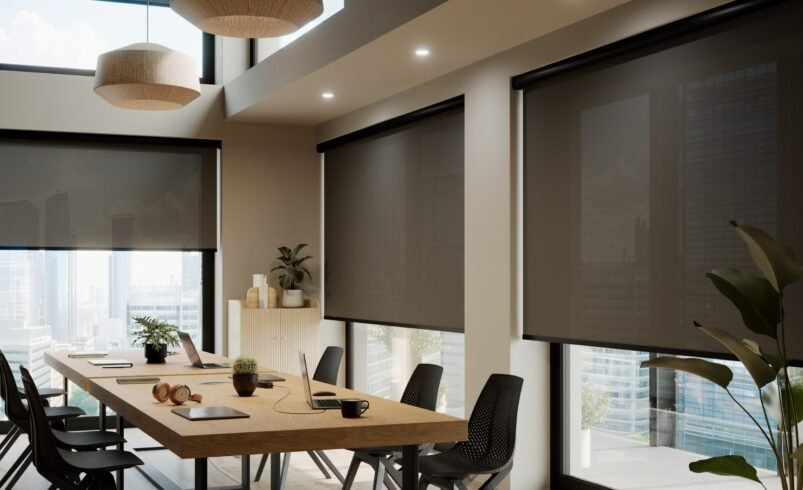
You go to a home store, walk through the store and you probably notice that roller blinds are pretty much the same. All of them roll up and down, all of them block light in various ways, and they all come in many different colors. But, there can be a huge price difference — some start at $30 and others can cost over $200 or more for similar size windows.
These huge price differences reflect real quality differences in the blinds, which will affect how long the blinds last, how easy it is to use the blinds, and whether the blinds will remain in a satisfactory state after many years.
Fabric Quality Factors
The quality of the fabric of the roller blind is one of the biggest quality factors that will exhibit quality differences in the long term. Roller blind fabrics that cost little are generally thin, of inconsistent density, and prone to a number of problems. Frequently when you hold these types of fabrics up to the light, you will see irregularities in the density, or “thin” areas.
Quality roller blind fabrics have consistent densities throughout. The weave is uniform, and the tightness of the weave is consistent. The material is of the correct weight; not too thin to tear easily, nor too heavy to apply undue pressure on the mechanism. Quality roller blind fabrics have a substantial feel, but are not stiff or “plastic”.
Additionally, the treatment of the surface of the fabric also affects the quality of the fabric. Block-out roller blind fabrics require proper backing to block light effectively. Generally, lower-cost block-out roller blind fabrics have very thin backings allowing small amounts of light to pass through, or degrading rapidly due to sunlight exposure. Quality roller blind block-out fabrics will block light for many years.
Sunscreen and translucent roller blind fabrics also display quality differences in how uniformly they filter light. Poor quality versions of these types of roller blinds will result in varying light transmission. Quality versions of sunscreen and translucent roller blinds will consistently filter light across the entire roller blind.
Mechanism and Hardware Quality
The mechanical mechanism used to raise and lower the roller blind determines how well the roller blind operates, and how long the roller blind will continue to operate. Low-cost roller blinds use low-weight plastic components that will deteriorate and fail quickly under load.
Quality roller blind mechanisms utilize metal components in critical areas (roller tube, brackets, and chain guides). Spring-loaded roller blinds should have consistent spring tension, and should be able to adjust the tension. Quality roller blind tubes vary in thickness. Thin aluminum tubes will flex or warp. Larger, heavier-duty tubes will remain rigid, and support larger heavier fabrics without sagging.
The quality of the chain or cord used to raise and lower the roller blind is a greater factor than many people realize. Cheap roller blind chains will fail, or get stuck in the guides. Quality roller blind chains will run smoothly through the guides without getting caught, and will endure hundreds of thousands of raises and lowers.
DIY-Friendly Designs Matter Too
Some roller blinds are designed to facilitate a consumer’s ability to DIY-install, giving the consumer the ability to install the roller blinds by themselves. Manufacturers create bracket systems that are easy to adjust, include instructions, and provide all the necessary hardware to create a DIY-friendly design. Roller Blinds are easy to measure and install yourself, thanks to these new features, ensuring that people can install blinds themselves.
Poorly constructed alternative to quality roller blinds have confusing bracket systems that require precision placement or do not accommodate slight measurement variations. Quality roller blinds have brackets that have adjustment ranges that can accommodate slight measurement errors or walls that are slightly uneven.
During the installation of roller blinds, the consumer can determine if the roller blinds were made with quality materials, and/or manufactured with quality in mind. Some roller blinds are installed with minimal effort and are operating smoothly immediately after installation. Other roller blinds require considerable effort to install the brackets and/or a fabric that will not roll evenly even after the brackets have been installed correctly.
Edge Treatments and Finishing
The manner in which the edges of the roller blind fabric are treated and finished, indicates the overall quality of the roller blind. Most low-cost roller blinds have raw or poorly finished edges that will fray over time. Typically, the attachment point for the bottom rail is simply glue, or utilizes inadequate clips.
Quality roller blinds have properly finished edges (heat-sealed or hemmed) to prevent fraying. The bottom rail attachment is a sturdy connection utilizing a suitable pocket or clip. The bottom rail should be substantial enough to hold the fabric taut, but not so heavy that it creates excessive stress on the mechanism.
UV Resistance and Fade Resistance
Roller blinds are located in windows that receive constant sunlight. Most low-cost roller blind fabrics will fade significantly in 1-2 years, especially on the sun-exposed side. The color will fade, and the roller blind will appear worn.
Quality roller blind fabrics contain UV inhibitors to protect against fading. They will retain their color consistency for many years, even in direct sunlight. Budget roller blinds that appeared to be adequate initially will now appear faded compared to quality roller blinds that remain new-looking.
This is particularly relevant for block-out roller blinds. Poorly constructed block-out roller blinds can become brittle from sunlight exposure and crack. Quality roller blinds maintain their physical properties because of the resistance to UV degradation.
Warranty Differences
Quality manufacturers stand behind their products with meaningful warranties (often 3-5 years or more), provide parts assistance if anything fails, and assist with troubleshooting issues.
Most low-cost options offer a limited warranty with almost no assistance. Warranty conditions clearly reflect the level of confidence the manufacturer has in their product. Providing comprehensive warranties for the mechanism, fabric, and hardware reflects quality manufacturing. Providing limited warranties with many exceptions reflects the expectation of failure.
Parts Assistance
In addition to warranty, the availability of parts assistance is another factor to consider. Can you replace a broken chain or cord? Quality suppliers maintain a stock of parts. Most low-cost options require replacing the entire roller blind for simple component failures.
Value of Price-Quality Balance Point
You cannot buy quality roller blinds at rock-bottom prices. At the lower end of the market, the cheapest roller blinds are usually not a good investment, as they will inevitably deteriorate and need to be replaced much sooner than more expensive options.
At the upper end of the market, spending the maximum amount on roller blinds is not always warranted, especially in rooms that receive little sunlight. Often times, you are paying for the name-brand or premium features that add nothing to the functionality of the roller blinds.
Typically, the best value can be found in the middle of the price-range. Middle-range priced roller blinds are quality-made with quality fabrics, reliable mechanisms and reasonable warranties.
When Quality Really Counts Most
Quality roller blinds are beneficial in rooms that are heavily used. These include living rooms, kitchens and primary bedrooms, as these rooms are used every day and will greatly benefit from the smooth operation and durability of high-quality roller blinds. Less-used rooms such as secondary bedrooms or guest rooms can likely be satisfied with mid-grade roller blinds.
Large windows require mechanisms that can handle the weight of the fabric without sagging, and therefore quality is important. Smaller windows, however, place less demand on the mechanisms and therefore mid-grade roller blinds may be sufficient.
Rooms that receive extreme sunlight (such as west-facing windows or sunrooms) will require quality UV-resistant fabrics. Rooms that receive little sunlight (such as north-facing or shaded windows) will require less durable fabrics.
Long-Term Viewpoint
While quality roller blinds cost more to purchase initially, they will last many years longer than budget roller blinds, and will look and function better over their life cycle. Budget roller blinds that must be replaced every 3-4 years, therefore, will ultimately cost more over a decade than quality roller blinds that will last 10+ years.
In addition to the monetary costs, the daily experience of using quality roller blinds is an additional consideration. Quality roller blinds operate smoothly, retain their appearance consistently and provide reliable light control and represent great value for the premium paid for these qualities. Fighting with a sticky mechanism, or viewing faded, sagging roller blinds is unpleasant and will eventually become tiresome.
Understanding the quality differences in roller blinds enables consumers to make informed purchasing decisions about where to invest more money in quality roller blinds and where a mid-grade roller blind will suffice. By understanding what quality means in roller blinds, therefore, you ensure that your dollar is spent in areas that truly matter.