6 Creative Ways to Incorporate Leather Into Your Everyday Wardrobe

Leather is too good-looking and versatile a material to reserve for exceptional moments. Relegating it to the occasional weekend is like only ever playing dress-up in your dad’s closet. Save that for Halloween.
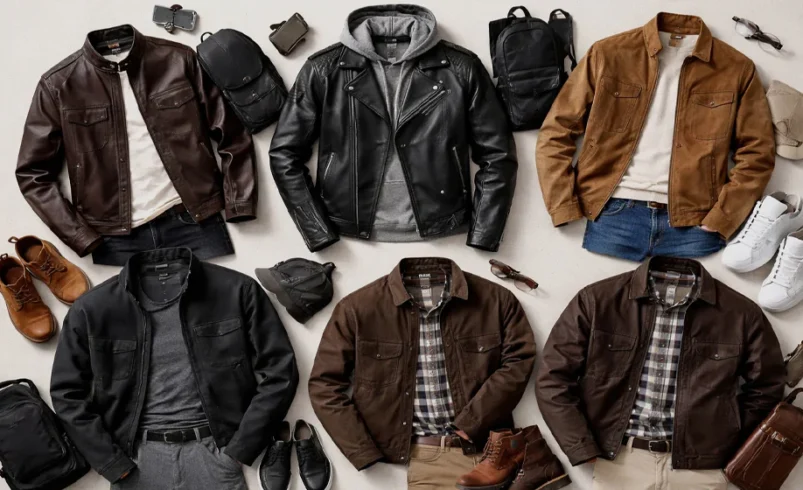
Cognac, burgundy, and olive are better starting points than black if you’re new to wearing leather regularly. These shades read as neutrals in natural light, pair with denim, tailored trousers, and wool knitwear without friction, and photograph well. Black leather signals intent. A cognac leather belt or chestnut tote just looks like someone who got dressed with care.
The High-Low Pairing That Actually Works
The natural structure of leather, the way it holds shape and resists drape, means it can read as stiff if everything else is equally polished. The fix is contrast, not clash.
Leather trousers with an oversized cotton tee. A fitted leather blazer over a washed linen shirt. The point is letting one element carry the formality while the other keeps it wearable. This isn’t a new idea in styling, but people apply it to knitwear and suiting and forget that leather responds to the same logic. The material doesn’t need backup – it needs counterweight.
Accents Before Investment Pieces
If you’re not ready to commit to a full leather garment, start smaller. A leather-trimmed pocket on a wool coat. Elbow patches on a blazer. A detachable leather collar on a plain crewneck. These aren’t compromise moves – they’re actually how you learn what you like about the material before spending on something significant.
Leather accessories are the most underused entry point. A quality watch strap, a slim belt with clean finished edges, a folded card holder in aniline-finished hide – each of these adds texture to a look without dictating it.
Think About Weight, Not Just Season
Thinking that leather is only for autumn and winter prevents us from considering many great alternatives. Ultrathin lambskin has a very different feel compared to the full-grain hide used in a moto jacket as it’s almost like a second skin, it breathes more, and it can be fashioned into summer-weight items without the piece appearing out of place. The application of perforated leather panels in a skirt or a sneaker upper allows air to flow in and out and completely alters the way the material clings to the body.
In fact, new-age leather manufacturing is creating these very alternatives. Designers opting for suppliers from the industry, like Global Leathers and LeatherSkins.com are experimenting with finishes such as transparent leather. These are materials that cover a color, capture light, and challenge the expectation that leather has to be heavy or solid-looking. The leather’s weight and finish determine its wearability and not simply the in or out of a season.
Fit Is Non-Negotiable With Leather Garments
Woven fabric forgives a lot. It eases around the body, shifts with movement, and can look intentional even when slightly oversized. Leather doesn’t offer that. A leather skirt that’s cut wrong will pull at the hip with every step. A leather blazer with excess fabric through the shoulders will look shapeless rather than relaxed.
This matters more for leather than almost anything else in your wardrobe because the material holds its cut. Get leather garments tailored if needed, and when you’re buying off the rack, prioritize fit across the shoulders and through the seat before everything else. You can adjust a hem. You can’t restructure the shoulder seam of a leather jacket without an experienced craftsperson and a real cost.
Maintain What You Buy
Leather develops patina – that slow evolution of texture and color that turns a familiar old belt or bag into something that feels even better at five years old than it did the day you brought it home. That transformation only enriches your relationship with the material if you’re taking care of its other needs. A conditioning balm, a protectant spray, and a diligent approach to keeping it away from direct heat every few months and rainy season are the equivalent of watering and weeding a garden. A little tending to and the leather will actually last long enough for that patina to develop: decades.
Sustainably tanned leathers respond best to conditioning; vegetable tanned leathers will get more supple, and their color will grow richer as they age while the coatings on most chrome-tanned leathers won’t let them develop and deepen in quite the same way. So if that kind of longevity is central to your choices when you shop, it’s worth inquiring after the tanning process each time you buy something new.
Quality Reveals Itself Over Time
Here’s why it makes sense to invest more in a single leather item rather than buying multiple synthetic items at lower costs. It’s not about showing off how much you spent – it’s about quality, which saves you money in the long run.
The stitching holds, the colour deepens rather than fades, and the structure stays true after years of wear. A synthetic jacket might look similar on the rack, but within a season it starts to betray itself — the surface cracks, the lining pulls, the shape loses its integrity. A well-made leather piece does the opposite. It asks for a little care in return and rewards you for it. One good belt or jacket bought at the right price will outlast three or four cheaper versions, which means the cost-per-wear calculation shifts entirely. That’s not a luxury argument. That’s just common sense.